Selecting a PCB supplier is one of the most consequential decisions a hardware engineer or procurement manager can make. While many companies claim to offer high-quality boards, the true test of reliability happens on the production floor.
If you want to ensure your designs are in safe hands, you must look beyond the sales brochure and audit the PCB factory itself. Whether you are conducting an on-site visit or a remote evaluation, here are the seven critical checkpoints to ensure your partner meets international standards.
1. Advanced Imaging & Laser Direct Imaging (LDI)
A top-tier PCB factory must have moved beyond traditional film masking. LDI technology allows for much higher precision, which is essential for fine-pitch components and tight trace/space tolerances. If your PCB supplier still relies heavily on manual film alignment, you may face registration issues on complex multi-layer boards.
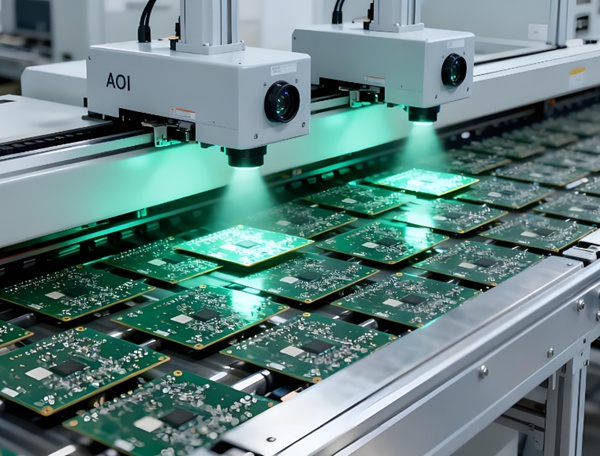
2. Automated Optical Inspection (AOI) Integration
Human error is inevitable, but a professional PCB factory mitigates this with AOI at multiple stages. Ensure your PCB supplier performs AOI both after inner-layer imaging and after final etching. This prevents “hidden” shorts or opens from being buried inside a laminated board.
3. UL and ISO Certification Validity
Trustworthiness is built on compliance. Any reputable PCB supplier should readily provide:
- ISO 9001:2015 for quality management.
- UL Certification (UL 796) for safety and flammability.
- RoHS/REACH compliance for environmental safety.
- IPC Class 2 or Class 3 standards for workmanship.
4. Copper Thickness & Plating Consistency
The reliability of your vias and power planes depends on the plating process. Ask the PCB factory about their cross-sectioning frequency. A reliable PCB supplier will perform regular “coupon tests” to verify that hole-wall plating meets the minimum 20µm (0.8 mil) requirement.
5. Surface Finish Capabilities
Whether it is HASL, ENIG, or OSP, the chemistry must be tightly controlled. A high-quality PCB factory maintains dedicated labs to test chemical concentrations daily, ensuring the surface finish on your boards provides optimal solderability and shelf life.
6. Cleanliness and Climate Control
Dust is the enemy of high-yield PCB fabrication. Observe the “Yellow Room” (Photolithography area). It should be a controlled cleanroom environment. If a PCB factory is dusty or disorganized, the risk of foreign objects (FOD) causing shorts is significantly higher.
7. CAM Engineering Support
A great PCB supplier acts as your second pair of eyes. Their PCB factory should have a robust CAM (Computer-Aided Manufacturing) department that performs a thorough DFM (Design for Manufacturability) check before production begins. This prevents costly errors before the first sheet of copper is even cut.
How to Conduct a Remote Audit of a PCB Supplier
If you cannot visit the PCB factory in person, follow these steps to verify their capabilities:
- Request a Live Video Tour
Real-time transparency is harder to fake than pre-recorded marketing videos.
- Ask for Recent Cross-Section Reports
A professional PCB supplier will have these on file for recent production batches.
- Review the Equipment List
Ensure they own the machinery (like Flying Probe Testers or Vacuum Laminators) rather than outsourcing critical steps.
- Verify Certifications
Use the UL IQ database to check if their UL file number is active and matches their factory address.

FAQ: Auditing Your PCB Factory
A: It depends on the PCB factory equipment. High-layer boards require precision vacuum lamination and advanced X-ray registration systems. Always ask for their “Capabilities Matrix” to see their maximum layer count and minimum trace width.
A: A trader is a PCB supplier that outsources production. A direct factory owns the equipment. Direct factories usually offer better technical support and lower costs, while traders may offer a wider variety of specialized services by using multiple factories.
A: For critical medical or automotive projects, an annual audit of the PCB factory is recommended. For general consumer electronics, a biennial (every two years) review is usually sufficient.
Partner with a Proven Manufacturer
At Han-Sphere, we take pride in our transparent production process. As a leading PCB supplier, we invite our clients to explore our PCB Factory Capabilities and see the precision we bring to every layer.
Need a quote for your next project? Contact our engineering team today for a comprehensive DFM review.