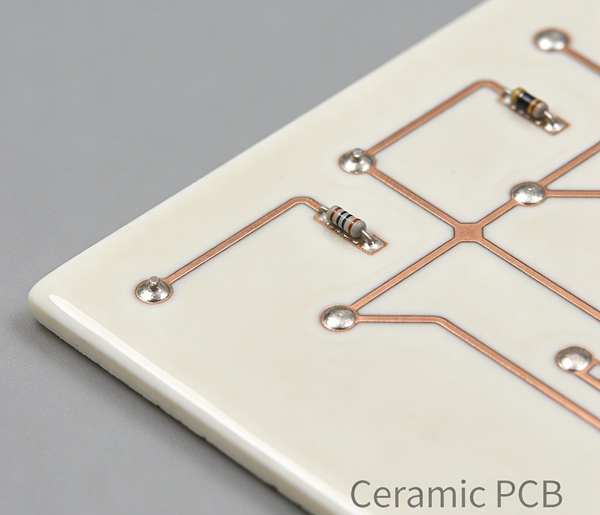
Ceramic substrates are often selected for electronic circuits that must operate under high thermal loads or demanding environmental conditions. Unlike conventional fiberglass laminates, ceramic materials provide significantly higher thermal conductivity and stable dielectric properties.
Because of these characteristics, ceramic PCBs are frequently used in power modules, high-brightness LED lighting, and radio-frequency circuits.
For a comparison between ceramic substrates and conventional PCB materials, see Ceramic PCB vs FR4 PCB: Thermal, Electrical, and Cost Comparison.
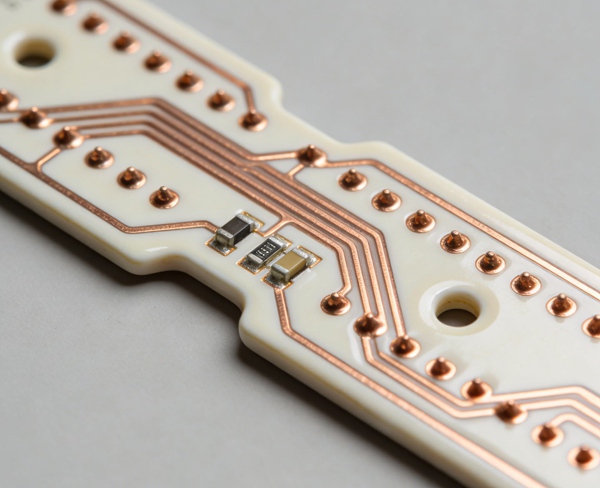
Why Ceramic PCBs Are Used in Advanced Electronics
Several material properties make ceramic substrates suitable for demanding electronic systems.
Typical advantages include:
- high thermal conductivity
- excellent electrical insulation
- low dielectric loss
- high temperature resistance
- stable mechanical properties
These characteristics allow ceramic PCBs to operate reliably in applications where conventional FR4 boards may experience thermal or electrical limitations.
Design considerations for ceramic substrates are discussed in Ceramic PCB Design Guide.
Power Electronics Applications
Power electronics systems often generate significant heat during operation. Efficient thermal dissipation is essential for maintaining device reliability and performance.
Ceramic PCBs are widely used in:
- IGBT modules
- power converters
- motor drives
- automotive inverters
- power control units
In these systems, semiconductor devices such as MOSFETs or IGBTs can produce substantial heat. Ceramic substrates help transfer this heat away from the components and into external heat sinks.
Direct Bonded Copper technology is commonly used in these applications because it provides thick copper layers capable of carrying high currents. More information about fabrication methods can be found in Ceramic PCB Manufacturing Process: DBC vs DPC vs Thick Film.
Thermal management strategies for these systems are explained further in Thermal Management in PCB Design.
LED Lighting Applications
High-power LED systems generate considerable heat at the junction of the semiconductor device. If this heat is not dissipated effectively, the LED’s brightness and lifespan may be reduced.
Ceramic PCBs are often used in LED modules because they provide efficient thermal conduction between the LED chip and the heat sink.
Common applications include:
- automotive headlights
- high-brightness industrial lighting
- street lighting systems
- stage and studio lighting
Ceramic substrates also provide stable electrical insulation, which improves reliability in high-temperature environments.
In many LED modules, Direct Plated Copper technology is used because it allows fine circuit patterns and compact layouts.
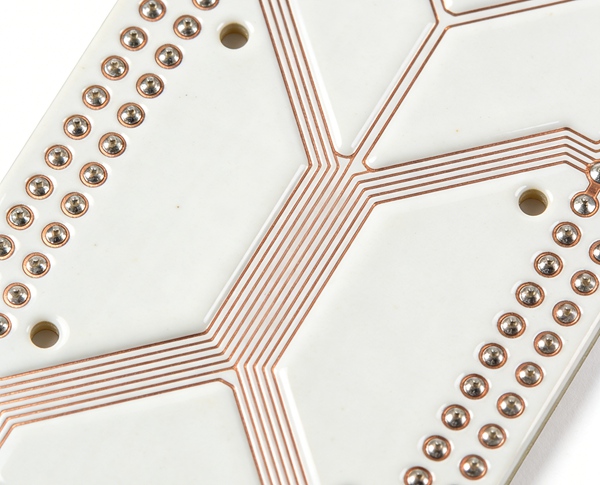
RF and Microwave Applications
Ceramic substrates are also widely used in radio-frequency and microwave circuits.
High-frequency circuits require materials with stable dielectric properties and low signal loss. Ceramic materials such as alumina provide these characteristics.
Typical RF applications include:
- RF power amplifiers
- microwave communication modules
- radar electronics
- satellite communication systems
- wireless base stations
Because RF circuits are sensitive to impedance variations and signal loss, substrate stability is important for maintaining consistent performance.
Additional design considerations for high-frequency circuits are discussed in High-Frequency PCB Design Guide.
Automotive and Harsh Environment Applications
In addition to power and RF electronics, ceramic PCBs are used in systems that must operate under challenging environmental conditions.
Examples include:
- electric vehicle power systems
- aerospace electronics
- industrial control equipment
- high-temperature sensors
Ceramic substrates can tolerate temperatures far above those typically allowed for FR4 boards. Their dimensional stability also improves long-term reliability.
Reliability considerations for such systems are explored in PCB Failure Analysis Guide.
Selecting the Right Ceramic PCB Technology
Different ceramic PCB manufacturing processes are used depending on the application.
For example:
- DBC is often used for high-current power modules
- DPC supports finer circuit patterns for LED and RF circuits
- Thick film technology is commonly used in hybrid microelectronics
The choice of process depends on factors such as circuit density, copper thickness, and cost requirements.
A detailed comparison of these technologies is available in Ceramic PCB Manufacturing Process: DBC vs DPC vs Thick Film.
Conclusion
Ceramic PCBs play an important role in electronic systems that require high thermal performance and reliable operation.
Power electronics rely on ceramic substrates for efficient heat dissipation, LED modules benefit from improved thermal conductivity, and RF circuits use ceramic materials for their stable electrical properties.
Understanding how ceramic PCBs are applied in these systems helps engineers choose appropriate materials and fabrication technologies during the design process.
FAQ
A: Ceramic PCBs are commonly used in power electronics, LED lighting modules, RF circuits, automotive electronics, and aerospace systems.
A: Ceramic substrates provide high thermal conductivity, allowing heat generated by power semiconductors to dissipate efficiently.
A: Yes. High-power LEDs generate significant heat, and ceramic PCBs help conduct heat away from the LED chip, improving reliability and lifespan.
A: Ceramic materials offer stable dielectric properties and low signal loss, which are important for high-frequency circuit performance.
A: Yes. Ceramic PCBs generally have higher material and manufacturing costs, but they provide superior thermal and electrical performance in demanding applications.