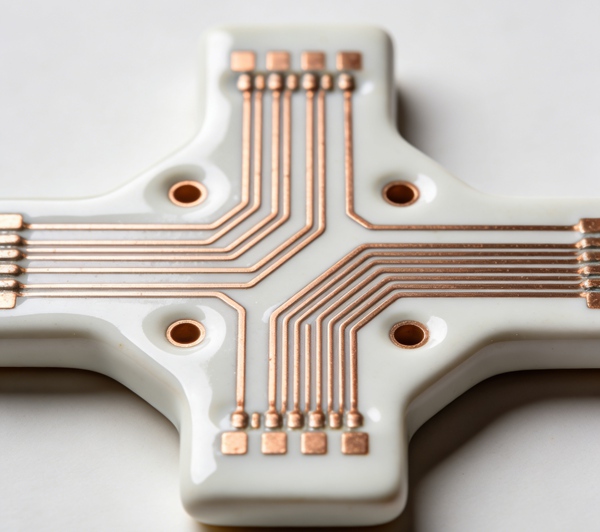
Ceramic PCBs are specialized circuit boards that use ceramic materials as the substrate instead of traditional fiberglass laminates. These substrates provide excellent thermal conductivity, electrical insulation, and mechanical stability.
Because of these properties, ceramic PCBs are commonly used in high-power electronics, RF systems, and applications where thermal management is critical.
Unlike standard FR4 boards, ceramic circuit boards can operate at significantly higher temperatures while maintaining stable electrical performance.
What Is a Ceramic PCB?
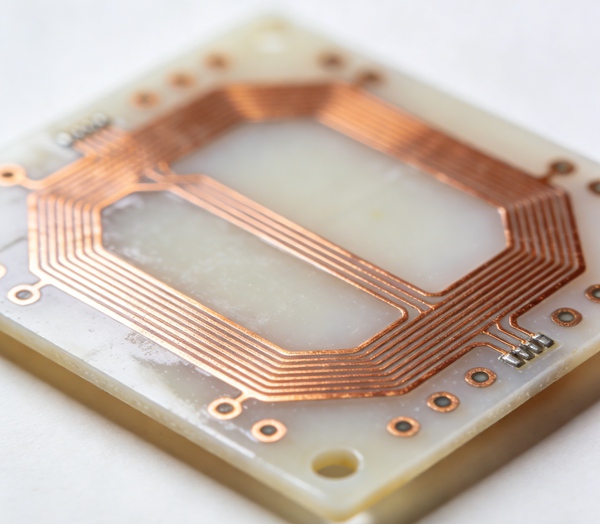
A ceramic PCB is a circuit board that uses ceramic material as the base substrate.
Common ceramic substrates include:
- alumina (Al₂O₃)
- aluminum nitride (AlN)
- beryllium oxide (BeO)
Copper circuits are formed on the ceramic surface using specialized processes such as direct bonded copper (DBC) or direct plated copper (DPC).
These manufacturing methods allow the copper layer to bond strongly with the ceramic substrate, creating a structure that supports high thermal loads and excellent electrical insulation.
Why Ceramic PCBs Are Used in High-Power Electronics
Traditional FR4 boards have limited thermal conductivity, typically around 0.3–0.5 W/m·K.
Ceramic substrates provide dramatically higher thermal performance.
Typical values include:
- Alumina: ~20–30 W/m·K
- Aluminum nitride: ~170–200 W/m·K
This improvement allows heat generated by power devices to be transferred more efficiently away from components.
As a result, ceramic PCBs are widely used in applications that require efficient thermal management.
Key Materials Used in Ceramic PCBs
Several ceramic materials are commonly used depending on the application requirements.
Alumina (Al₂O₃)
Alumina is the most widely used ceramic PCB material.
Advantages:
- relatively low cost
- good electrical insulation
- stable mechanical properties
Typical applications include LED modules, power modules, and sensor electronics.
Aluminum Nitride (AlN)
Aluminum nitride provides significantly higher thermal conductivity than alumina.
Advantages include:
- excellent heat dissipation
- good electrical insulation
- compatibility with high-power devices
AlN is often used in high-power semiconductor modules and RF amplifiers.
Beryllium Oxide (BeO)
Beryllium oxide offers extremely high thermal conductivity, but its use is limited due to toxicity concerns during manufacturing.
For this reason, it is less common in modern designs.
Ceramic PCB Structure
Ceramic PCBs can be manufactured using different structural approaches.
The most common structures include:
DBC (Direct Bonded Copper)
In DBC boards, thick copper foil is bonded directly to the ceramic substrate using high-temperature processes.
DBC structures are widely used in power modules because they can support high current and excellent heat transfer.
DPC (Direct Plated Copper)
DPC technology uses electroplating to deposit copper directly onto the ceramic substrate.
This process enables finer trace patterns and is commonly used in high-density RF and LED applications.
Design Considerations for Ceramic PCBs
Designing ceramic PCBs requires different considerations compared with traditional PCBs.
Thermal Management
One of the primary reasons for using ceramic substrates is improved heat dissipation.
Designers should place high-power components close to thermal paths that allow heat to transfer efficiently into the ceramic material.
Thermal vias may also be used when ceramic boards are integrated with additional heat spreaders.
Mechanical Stress
Ceramic materials are rigid and brittle compared with FR4 laminates.
Designers must avoid excessive mechanical stress during assembly and operation.
Large temperature changes can also cause stress due to differences in thermal expansion between components and the ceramic substrate.
Copper Thickness
Ceramic PCBs often use thicker copper layers than standard PCBs.
Thick copper improves current handling capability and heat spreading across the substrate.
However, thicker copper also increases manufacturing complexity and cost.
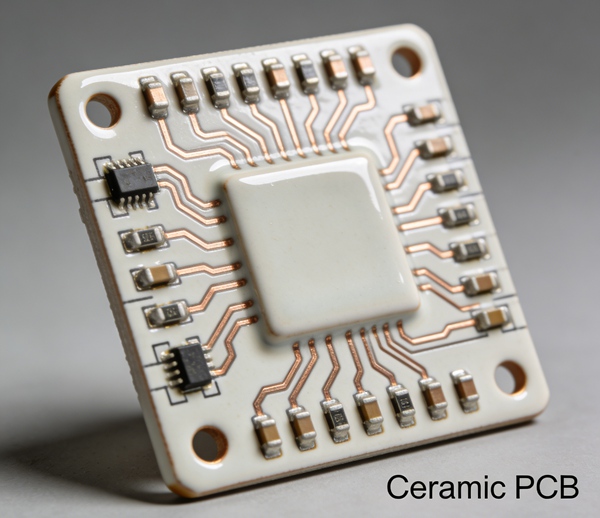
Typical Applications of Ceramic PCBs
Ceramic circuit boards are widely used in industries that require high thermal performance and electrical reliability.
Common applications include:
- LED lighting modules
- power semiconductor modules
- automotive power electronics
- RF amplifiers and microwave circuits
- aerospace electronics
These applications benefit from the thermal stability and electrical insulation properties of ceramic substrates.
Conclusion
Ceramic PCBs provide significant advantages in applications that require efficient heat dissipation and high electrical reliability.
By using ceramic substrates such as alumina or aluminum nitride, engineers can design electronic systems that operate at higher power levels and temperatures than traditional FR4 boards.
Although ceramic PCBs are typically more expensive to manufacture, their thermal performance and reliability make them essential in many advanced electronic systems.
FAQ
A: A ceramic PCB is a circuit board that uses ceramic materials such as alumina or aluminum nitride as the substrate instead of fiberglass laminates.
A: Ceramic materials have much higher thermal conductivity than FR4, allowing heat generated by power devices to dissipate more efficiently.
A: Alumina is the most widely used ceramic PCB material because it offers good electrical insulation and relatively low cost.
A: Ceramic PCBs provide better thermal performance and temperature stability, but they are typically more expensive than FR4 boards.
A: Ceramic PCBs are commonly used in LED lighting, automotive electronics, RF systems, aerospace electronics, and power semiconductor modules.