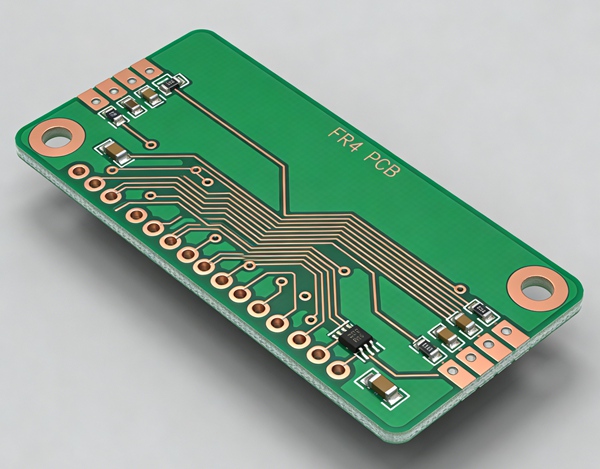
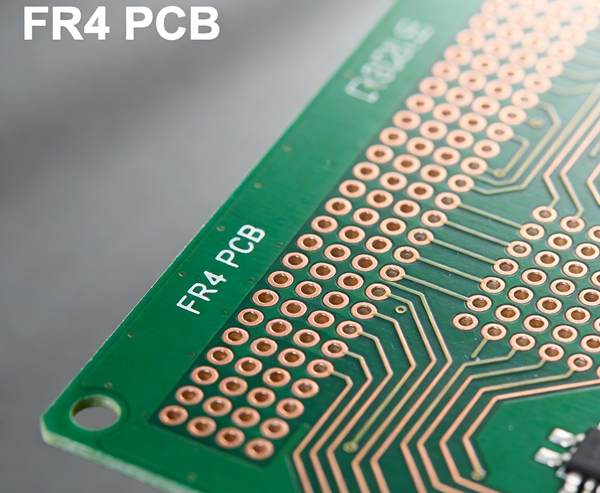
FR4 laminates are widely used as the substrate material in printed circuit boards. They offer a combination of mechanical strength, electrical insulation, and cost efficiency, which makes them suitable for many electronic products.
However, when circuits operate at higher temperatures or require greater thermal reliability, standard FR4 materials may not always provide sufficient performance. In such cases, designers often select high-Tg FR4 laminates.
To understand this difference, it is important to look at the concept of glass transition temperature.
For an overview of FR4 materials, see FR4 PCB Material Guide: Properties, Advantages, and Applications.
What Is Tg in PCB Materials?
Tg stands for glass transition temperature. It represents the temperature at which the resin material in the laminate changes from a rigid, glass-like structure to a softer and more flexible state.
When the temperature approaches or exceeds the Tg value, the material may begin to expand more rapidly and lose mechanical stability.
Because of this behavior, Tg is an important parameter when evaluating PCB reliability in high-temperature environments.
Standard FR4 Materials
Standard FR4 laminates typically have Tg values around 130°C to 140°C.
These materials are widely used in consumer electronics and many industrial products because they provide reliable performance under normal operating conditions.
Typical applications include:
- consumer electronics
- control systems
- power supplies
- communication equipment
For many designs with moderate temperature requirements, standard FR4 materials are sufficient.
High-Tg FR4 Materials
High-Tg FR4 laminates are engineered with modified resin systems that increase the glass transition temperature.
Common high-Tg values include:
- 170°C
- 180°C
- 200°C
Higher Tg materials remain mechanically stable at elevated temperatures and are better suited for circuits exposed to repeated thermal cycles.
These laminates are commonly used in:
- automotive electronics
- power electronics
- industrial control systems
- high-reliability equipment
Key Differences Between FR4 and High-Tg FR4
The most significant difference between these materials is their thermal stability.
| Property | Standard FR4 | High-Tg FR4 |
|---|---|---|
| Glass transition temperature | ~130–140°C | ~170–200°C |
| Thermal stability | moderate | higher |
| Resistance to thermal cycles | standard | improved |
| Manufacturing cost | lower | slightly higher |
Higher Tg materials generally provide better dimensional stability during soldering and reflow processes.
How to Choose Between FR4 and High-Tg FR4
Selecting between standard FR4 and high-Tg FR4 materials usually depends on the expected operating temperature and reliability requirements of the circuit board.
Engineers typically evaluate several design factors before making a material selection.
- 1. Check the Maximum Operating Temperature
The first step is estimating the maximum temperature the PCB may experience during operation.
If the board temperature remains well below the Tg value of standard FR4, the material will usually perform reliably. However, circuits exposed to elevated temperatures may benefit from high-Tg laminates. - 2. Consider the Assembly Process
Modern electronics often use lead-free soldering, which involves higher reflow temperatures.
During repeated soldering cycles, high-Tg materials provide better dimensional stability and reduce the risk of laminate deformation. - 3. Evaluate Thermal Cycling Conditions
Applications such as automotive electronics and industrial equipment may experience repeated heating and cooling cycles.
In these cases, high-Tg FR4 materials are often preferred because they provide better resistance to thermal stress and long-term reliability.
Thermal design considerations are explained further in Thermal Management in PCB Design. - 4. Review PCB Layer Count
Multilayer PCBs with many layers may experience greater internal stress during lamination and reflow.
High-Tg laminates are often used in:
8-layer boards
10-layer boards
high-density designs
Stackup design considerations are discussed in FR4 PCB Stackup Design Guide. - 5. Compare Cost and Reliability
High-Tg FR4 materials are slightly more expensive than standard FR4 laminates. However, the price difference is often small compared with the total cost of the PCB assembly.
For designs where reliability is critical, selecting high-Tg materials can help reduce long-term failure risks.
Cost considerations are explained in PCB Manufacturing Cost Factors.
When to Use High-Tg FR4
High-Tg FR4 is typically recommended in situations where PCBs experience elevated temperatures or repeated thermal stress.
Examples include:
- lead-free soldering processes
- high-power electronics
- multilayer boards with dense routing
- automotive environments
In these cases, higher Tg materials help maintain board stability and reduce the risk of delamination.
Thermal considerations for PCB design are discussed further in Thermal Management in PCB Design.
Stackup Considerations for High-Tg Materials
High-Tg FR4 materials can generally be used with the same multilayer stackup structures as standard FR4 laminates.
However, designers may choose these materials when:
- the board has many layers
- thermal cycles during assembly are significant
- mechanical reliability is critical
Additional stackup planning considerations are explained in FR4 PCB Stackup Design Guide.
Cost Considerations
High-Tg FR4 materials typically cost more than standard FR4 laminates because they use more advanced resin systems.
However, the price difference is often relatively small compared with the total cost of the PCB assembly.
For designs where reliability is critical, using high-Tg materials can help reduce long-term failure risks.
Manufacturing cost considerations are discussed further in PCB Manufacturing Cost Factors.
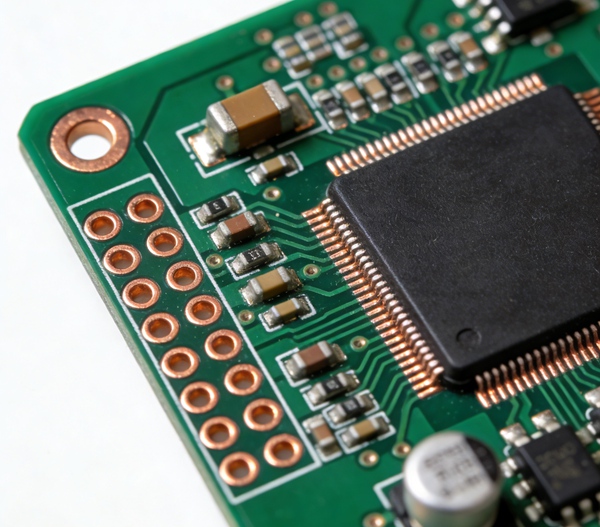
FR4 vs High-Tg FR4 vs Other Materials
In some applications, even high-Tg FR4 may not provide sufficient thermal performance.
Alternative materials may include:
- metal-core PCBs for LED systems
- ceramic substrates for high-power electronics
- specialized RF laminates for high-frequency circuits
A comparison between FR4 and ceramic substrates can be found in Ceramic PCB vs FR4 PCB: Thermal, Electrical, and Cost Comparison.
Conclusion
Standard FR4 laminates remain the most widely used PCB substrate material because they offer reliable performance and low manufacturing cost.
High-Tg FR4 materials provide improved thermal stability and are better suited for designs exposed to higher operating temperatures or repeated thermal cycles.
Selecting between these materials depends on the thermal environment, reliability requirements, and manufacturing considerations of the final product.
FAQ
A: Tg stands for glass transition temperature. It indicates the temperature at which the resin in the PCB laminate begins to soften and change mechanical properties.
A: High-Tg FR4 materials provide improved thermal stability, making them suitable for applications involving higher operating temperatures or multiple soldering cycles.
A: Not necessarily. Standard FR4 is sufficient for many applications. High-Tg materials are typically used when additional thermal reliability is required.
A: Yes, high-Tg laminates usually cost slightly more than standard FR4 materials, but the price difference is often modest.
A: Yes. High-Tg FR4 materials are commonly used in multilayer boards, especially when thermal stability during manufacturing is important.