Selecting the right PCB manufacturer is one of the most consequential decisions in any electronics product development cycle. Make the right call, and you gain a reliable partner who delivers consistent quality, competitive lead times, and transparent pricing. Make the wrong call, and you face delayed shipments, hidden costs, and boards that fail in the field.
This guide walks you through everything you need to know — from defining your technical requirements to auditing a supplier’s factory floor — so you can choose a PCB manufacturer with confidence. Whether you’re sourcing prototypes or locking in a mass-production partner, the same evaluation framework applies.

Why Choosing the Right PCB Manufacturer Matters
The PCB is the backbone of every electronic device. A poorly manufactured board — with incorrect impedance, insufficient copper adhesion, or inadequate solder mask coverage — can render an entire product unusable, even if every other component is perfect. The consequences ripple across your supply chain: failed audits, costly rework, field recalls, and damaged customer relationships.
Beyond quality, your choice of PCB supplier also affects your competitive position. Manufacturers who offer transparent, instant quoting, DFM (Design for Manufacturability) feedback, and flexible minimum order quantities give engineering teams a real edge during the design iteration phase. Meanwhile, manufacturers who scale efficiently and meet IPC compliance requirements protect you during mass production.
The Hidden Costs of the Wrong PCB Supplier
Many buyers focus exclusively on unit price when comparing PCB quotes. But the total cost of ownership includes engineering rework caused by avoidable manufacturing errors, air freight charges from missed lead times, re-inspection costs when boards fail incoming QC, and the intangible cost of delayed market entry. A manufacturer that quotes 10% cheaper but consistently delivers substandard boards is never actually cheaper. Always evaluate cost alongside capability and reliability.
Key Criteria for Evaluating a PCB Manufacturer
Before issuing an RFQ, you need a clear framework for comparing candidates. The following five criteria should anchor your evaluation.
1. Manufacturing Capabilities and Technology Range
The first question to ask any potential PCB manufacturer is: can you actually build my board? Capabilities vary enormously between suppliers. Key parameters to verify include:
- Layer count range: From simple 2-layer boards to complex 20+ layer HDI and rigid-flex designs
- Minimum trace/space: Critical for high-density or high-speed PCB designs
- Hole size and aspect ratio: Determines viability for microvias and blind/buried via structures
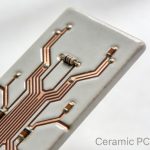
- Materials handled: FR4, Rogers, polyimide, aluminum-backed, ceramic, and specialty substrates
- Surface finish options: HASL, ENIG, OSP, immersion silver, and hard gold
- Special processes: Impedance control, back-drilling, press-fit connectors, carbon ink, and edge plating
A manufacturer who only handles standard FR4 two-layer boards is not the right partner for a multi-layer high-frequency RF PCB. Confirm in writing that the supplier has successfully produced boards with your specific technology combination — don’t assume from a capabilities checklist alone.
If your design incorporates specialized requirements, you may need a supplier with a dedicated production line for medical and automotive PCBs, where process controls and traceability requirements far exceed standard commercial practice.
2. Quality Certifications: What Really Matters

Certifications are a starting point, not an endpoint. They tell you a manufacturer has built and audited a quality management system — they don’t guarantee every board will meet your specifications. That said, the absence of relevant certifications is a major red flag. Look for:
- ISO 9001:2015 — Baseline quality management system. Required for any serious supplier.
- UL Certification — Mandatory if your product is sold in North American markets and requires UL listing.
- IATF 16949 — Automotive quality management system. Required for Tier 1 and Tier 2 automotive supply chains.
- ISO 13485 — Medical device quality management. Required for boards used in regulated medical equipment.
- IPC-A-600 and IPC-6012 — Industry-standard inspection criteria for acceptability and qualification of rigid PCBs.
Understanding the difference between IPC Class 2 and Class 3 standards is essential before finalizing your supplier selection — especially if your product operates in a demanding environment where field failure is not an option.
Always request copies of current certificates and verify their validity dates. A certificate that expired two years ago tells you more than you might want to know about a supplier’s commitment to ongoing compliance.
3. Lead Times and Production Capacity
Lead time is one of the most commonly misrepresented parameters in PCB procurement. A manufacturer quoting “5-day standard lead time” may mean 5 working days from Gerber approval — not from the day you place your order. Clarify the following before committing:
- Is the quoted lead time from order confirmation or from Gerber file approval?
- What is the average engineering review duration before production begins?
- What is the actual factory utilization rate — and does it fluctuate seasonally?
- Are express or expedite options available, and at what premium?
- What is the on-time delivery (OTD) rate over the past 12 months?
For high-volume production, capacity matters as much as lead time. A manufacturer who can efficiently handle 10,000-unit prototype runs may struggle to scale to 500,000 units without compromising yield or lead time. Understanding how a leading PCB supplier manages its factory workflow — from order placement through final inspection — gives you insight into whether their production model can absorb your demand peaks.
4. Pricing Transparency and Quote Accuracy
Pricing in PCB manufacturing is notoriously opaque. The base board price is only one component of your total landed cost. A complete and accurate quote should itemize:
- Engineering setup / NRE (Non-Recurring Engineering) fees
- Board fabrication cost (typically expressed as cost per square meter)
- Testing fees (E-test, AOI, X-ray if applicable)
- Special process surcharges (impedance control, gold fingers, POFV, etc.)
- Panelization and tooling charges
- Packing and freight costs
Be wary of manufacturers who refuse to itemize their quotes or whose pricing changes significantly between the initial quote and the final invoice. Pricing transparency is a strong proxy for the overall trustworthiness of a supplier relationship.
5. Engineering Support and Communication
The best PCB manufacturers act as engineering partners, not just fabrication shops. Look for suppliers who proactively provide DFM (Design for Manufacturability) reports that flag potential issues before production begins, assign a dedicated account engineer who understands your product and industry, respond to technical queries within a defined SLA, offer DFQ (Design for Quality) feedback based on common failure modes in your design type, and provide clear escalation paths when issues arise.
Poor communication is one of the leading causes of PCB project delays. A supplier who takes 72 hours to answer a simple material question will cost you far more than their lower unit price saves.
How to Choose a PCB Manufacturer: Step-by-Step Process

With the evaluation criteria clear, here is a practical step-by-step process for making your final selection decision.
Step 1: Define Your PCB Requirements in Detail
Before contacting any manufacturer, document your complete PCB specification: layer count, board dimensions, materials, copper weights, surface finish, solder mask color, minimum feature sizes, IPC class, testing requirements, and any special processes. The more precisely you define your requirements upfront, the more accurate and comparable the quotes you receive will be. Vague specifications result in vague quotes — and unpleasant surprises later.
Step 2: Research and Build a Shortlist
Identify 5–8 candidate manufacturers through industry directories, peer recommendations, trade show contacts, and IPC member lists. For each candidate, verify their stated capabilities against your requirements, confirm they hold the necessary certifications, and check publicly available reviews or references. Narrow your list to 3–4 suppliers who clearly have the technical capability to produce your boards at the required quality level.
Step 3: Request DFM Analysis and Sample Quotes
Send your Gerber files and full specification package to your shortlisted manufacturers and request both a DFM analysis and a formal quote. Evaluate not just the price, but the quality and depth of the DFM feedback. A manufacturer who identifies 12 potential design issues in your files is demonstrating exactly the engineering competency you want in a long-term partner. One who returns a quote with no DFM comments on a complex board is either not looking carefully or not capable of finding problems.
Step 4: Evaluate the Factory — Remotely or In-Person
For any supplier you are considering for production volumes, a factory evaluation is non-negotiable. This can be conducted via an on-site visit, a third-party audit, or a structured remote audit using factory-provided documentation, photos, and video walkthroughs. Key checkpoints in a factory evaluation include equipment age and maintenance status, process control documentation (SOPs, work instructions), statistical process control (SPC) implementation, and operator training and certification levels.
For a detailed guide to what to look for, see our article on how to audit a PCB supplier with 7 critical factory checkpoints.
Step 5: Compare Total Cost of Ownership
Once you have quotes from your shortlisted manufacturers, build a total cost of ownership comparison that goes beyond unit price. Factor in NRE fees amortized over your expected production volume, estimated rework costs based on industry-average yield rates for each manufacturer, freight costs including any expedite premium for likely delivery delays, and the cost of your engineering team’s time managing each supplier relationship. The manufacturer with the lowest total cost of ownership — not necessarily the lowest unit price — is the right choice.
Step 6: Start with a Qualification Build
Before committing to high-volume production, place a qualification build order. Use this order to verify incoming inspection results against your acceptance criteria, validate the manufacturer’s DFM feedback against actual build results, establish your baseline yield rate, and confirm that the supplier’s documentation package (CoC, test reports, date codes) meets your requirements. Use what you learn in the qualification build to finalize your long-term supplier agreement.
Red Flags to Avoid When Selecting a PCB Supplier
Not every manufacturer who presents well in an RFQ process will deliver in production. Watch for these warning signs:
- No DFM process: A manufacturer who never flags design issues is either not looking or lacks the capability to identify problems before they become failures.
- Unwillingness to disclose their sub-suppliers: Multi-tier supply chains are fine, but opacity about where your boards are actually made is a risk you cannot manage.
- Expired or unverifiable certifications: Request current certificates and verify their authenticity directly with the issuing body.
- Excessive sub-contracting: If a supplier is outsourcing more than 20% of your order to other fabricators without your knowledge, your quality controls are meaningless.
- Inconsistent quotes: Large price swings between the initial quote and the final invoice indicate poor process control or deliberate low-balling.
- No dedicated account engineer: Manufacturers who cannot assign a single technical point of contact for your account will struggle to maintain quality consistency.
Working directly with a direct PCB factory rather than a trading intermediary eliminates many of these risks by giving you direct visibility into the production process and a clear chain of accountability.
Frequently Asked Questions
What is the most important factor when choosing a PCB manufacturer?
There is no single most important factor — it depends on your specific project requirements. For high-reliability applications (aerospace, medical, military), quality certifications and IPC class compliance are paramount. For consumer electronics with aggressive time-to-market goals, lead time and DFM responsiveness may be more critical. For cost-sensitive, high-volume production, total cost of ownership and yield rates drive the decision. Build your evaluation framework around your product’s specific requirements, not a generic ranking.
How do I know if a PCB manufacturer is actually certified?
Request a copy of the current certificate and verify it directly with the certifying body. ISO certificates include a registration number that can be validated through the relevant accreditation authority. UL certifications can be verified through UL’s online Product iQ database. Certificates that cannot be verified or whose registration numbers do not return a match are red flags regardless of how professional the physical document looks.
What is the difference between a PCB manufacturer and a PCB supplier?
A PCB manufacturer owns and operates the fabrication equipment — laminators, direct imaging systems, plating lines, AOI machines. A PCB supplier (or broker) takes orders and outsources fabrication to one or more manufacturers. Both can be legitimate business models, but working with a direct manufacturer typically provides more control over quality, lead times, and process transparency. For critical applications, knowing exactly which factory is producing your boards — and being able to audit that factory — is an important risk management tool.
How many PCB manufacturers should I qualify?
For production volumes, qualifying a minimum of two manufacturers provides supply chain resilience. If your primary supplier has a capacity event, quality excursion, or geopolitical disruption, a qualified secondary source allows you to maintain continuity without an emergency resourcing process. For critical components, some companies qualify three suppliers: a primary for cost-optimized production, a secondary for overflow capacity, and an expedite source for urgent requirements.
What IPC class should I specify for my PCBs?
IPC Class 2 is appropriate for most commercial and industrial electronics where a longer product life is desired but field repair is possible. IPC Class 3 is required for high-reliability applications — avionics, medical implants, military systems — where continued performance is critical and failure is not an acceptable outcome. Class 3 manufacturing involves tighter process controls, more frequent inspections, and higher cost. For a detailed comparison, see our guide on IPC Class 2 vs. Class 3 standards.
How long does it take to qualify a new PCB manufacturer?
A thorough qualification process — including RFQ, DFM review, sample build, incoming inspection, and factory audit — typically takes 6 to 12 weeks for a new supplier relationship. Rushing the qualification process to meet an immediate production need is one of the most common causes of quality problems in PCB procurement. Build qualification timelines into your product development schedule before you need a new supplier, not after.
Can I use the same PCB manufacturer for prototypes and production?
Yes — and in many cases it is advantageous to do so. A manufacturer who builds your prototypes develops institutional knowledge of your design and the associated manufacturing challenges. When you transition to production, that knowledge reduces the risk of yield surprises. However, some manufacturers are optimized for prototype speed at the expense of the process repeatability required for high-volume production. Confirm early in the prototype phase whether your supplier has the capacity and process maturity to scale to your production volumes.
Conclusion
Choosing the right PCB manufacturer is a structured decision that requires clear requirements, a systematic evaluation process, and a willingness to invest time in supplier due diligence before production begins. The buyers who do this work upfront — defining specifications precisely, evaluating manufacturing capabilities rigorously, validating certifications independently, and running structured qualification builds — consistently achieve better quality outcomes, more predictable lead times, and lower total costs than those who select suppliers on unit price alone.
Use this guide as a starting framework. Adapt the criteria weights to your specific product requirements, regulatory environment, and supply chain strategy. And remember: the best PCB manufacturer for your application is the one who can consistently deliver the quality and reliability your product demands — at every production volume, in every quarter.