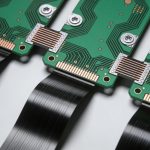
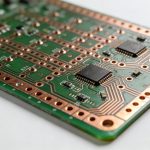
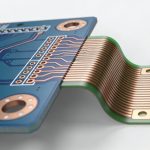
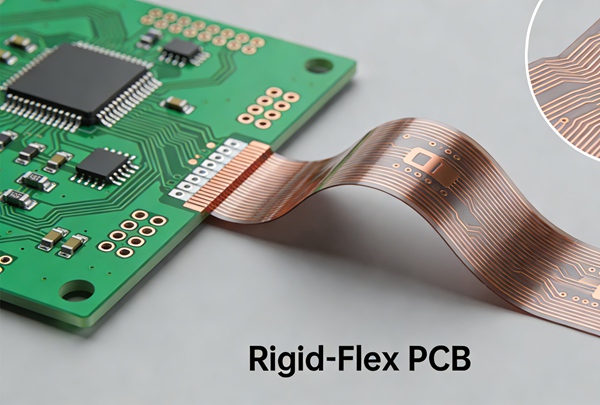
Rigid-flex PCBs combine rigid laminate layers with flexible polyimide circuits in a single structure. This design approach eliminates connectors and cables while allowing compact mechanical integration.
Although rigid-flex technology can improve reliability and reduce assembly complexity, the fabrication process is significantly more complex than standard PCB manufacturing.
As a result, rigid-flex boards often have higher production costs. However, many of these costs are strongly influenced by design decisions made early in the development process.
Understanding how design choices affect manufacturing cost allows engineers to optimize rigid-flex PCB designs for both performance and budget.
For an introduction to rigid-flex technology, see Rigid-Flex PCB Design: Fundamentals and Applications.
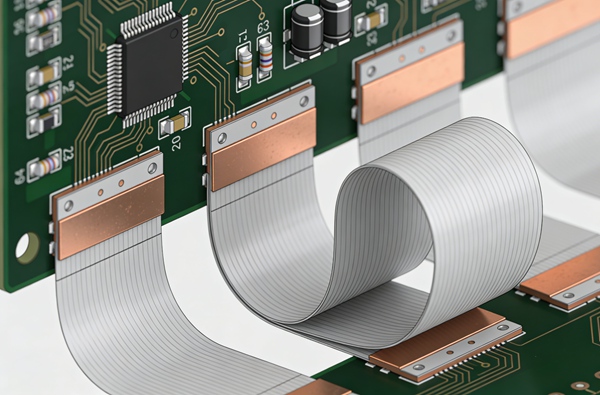
Why Rigid-Flex PCBs Cost More Than Standard PCBs
Rigid-flex boards require specialized materials and manufacturing processes.
Compared with conventional rigid PCBs, rigid-flex fabrication typically involves:
- multiple lamination cycles
- flexible polyimide materials
- complex drilling processes
- precise layer alignment
- additional inspection steps
These processes increase both manufacturing time and production risk, which contributes to higher overall cost.
A detailed overview of fabrication steps can be found in Rigid-Flex PCB Manufacturing Process and Design Guidelines.
Key Design Factors That Affect Rigid-Flex PCB Cost
Several design parameters have a direct impact on rigid-flex PCB pricing.
Understanding these factors can help engineers control costs without sacrificing reliability.
Layer Count
Layer count is one of the most significant cost drivers.
Rigid-flex PCBs often include multiple rigid layers combined with one or more flexible circuits.
Increasing the number of layers increases:
- material consumption
- lamination cycles
- drilling complexity
High-layer rigid-flex boards are common in aerospace and medical systems but require more advanced manufacturing processes.
Proper stackup planning helps reduce unnecessary layers while maintaining signal integrity.
More details about stackup structures are discussed in Rigid-Flex PCB Stackup Design Guide.
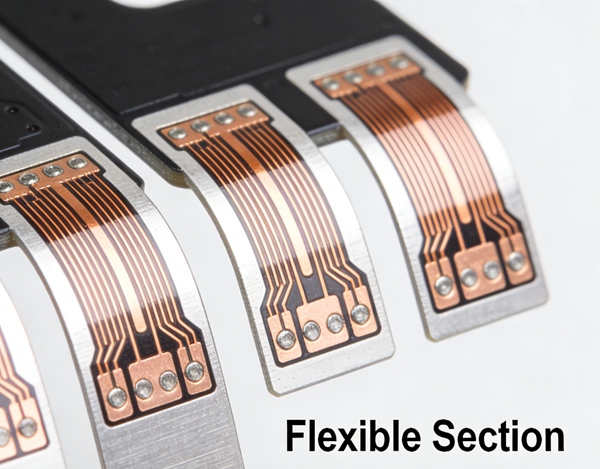
Flex Layer Complexity
The design of the flexible region strongly influences manufacturing cost.
Factors that increase complexity include:
- multiple flex layers
- dense routing in bend areas
- tight trace spacing
- complex coverlay openings
Simpler flex circuits are easier to manufacture and typically have higher production yields.
Designers should avoid unnecessary routing density in flex sections whenever possible.
Material Selection
Rigid-flex PCBs use specialized materials that are more expensive than standard PCB laminates.
Typical materials include:
- polyimide substrates
- rolled-annealed copper
- coverlay insulation layers
- high-temperature adhesives
Material thickness and copper type also influence mechanical performance and fabrication cost.
Material choices should be aligned with the mechanical requirements of the product.
Board Size and Panel Utilization
Larger boards require more material and reduce panel efficiency during fabrication.
Rigid-flex boards also require specific panelization strategies to accommodate both rigid and flexible sections.
Poor panel utilization can significantly increase manufacturing cost.
Designers should consider board dimensions and panel layout early in the design process.
Bend Region Design
The flex bend area is one of the most sensitive regions in a rigid-flex PCB.
Design errors in this region can reduce manufacturing yield and increase production costs.
Important considerations include:
- maintaining proper bend radius
- avoiding vias in flex regions
- using smooth trace routing
Failure to follow these guidelines may result in copper cracking or reliability failures.
More details are explained in Rigid-Flex PCB Bend Radius and Reliability Design Rules.
Manufacturing Yield
Yield refers to the percentage of boards that can be successfully manufactured without defects.
Rigid-flex PCBs typically have lower yields than standard rigid boards because of their structural complexity.
Factors that may reduce yield include:
- very thin flex layers
- tight tolerances
- complex lamination structures
Designs that simplify stackups and avoid extreme manufacturing constraints generally achieve better yields and lower overall cost.
Assembly Considerations
Rigid-flex boards can reduce system assembly cost by eliminating connectors, cables, and additional PCBs.
This system-level benefit is often overlooked when comparing PCB fabrication costs.
Although the PCB itself may be more expensive, the total product cost may decrease due to simplified assembly and improved reliability.
For products with complex mechanical layouts, rigid-flex PCBs can provide a more efficient design solution.
Cost Optimization Tips for Rigid-Flex PCB Design
Several practical strategies can help reduce rigid-flex PCB manufacturing costs.
Limit the number of flex layers unless additional routing density is required.
Avoid placing vias inside bend regions.
Use standard material thicknesses whenever possible.
Maintain reasonable trace spacing and design tolerances.
Collaborate with PCB manufacturers early in the design stage to verify stackup feasibility.
These practices help improve production yield and reduce fabrication complexity.
Conclusion
Rigid-flex PCBs offer unique advantages in compact and high-reliability electronic systems. However, their manufacturing cost is influenced by multiple design factors, including layer count, material selection, flex complexity, and production yield.
By understanding how these variables affect fabrication cost, engineers can design rigid-flex boards that achieve the required performance while maintaining reasonable manufacturing budgets.
Careful stackup planning and collaboration with PCB manufacturers remain key steps in optimizing rigid-flex PCB cost.
FAQ
A: Rigid-flex boards require specialized materials and more complex manufacturing processes, including multiple lamination cycles and precision alignment between rigid and flexible sections.
A: Layer count and stackup complexity are usually the largest cost factors because they increase material usage and manufacturing steps.
A: Yes. Extremely small bend radii require tighter manufacturing tolerances and may reduce production yield, which can increase overall cost.
A: In many cases, yes. Rigid-flex boards can eliminate connectors, cables, and extra assembly steps, which may reduce total system cost.
A: Designers can control costs by simplifying stackups, reducing unnecessary flex layers, using standard materials, and avoiding complex routing in bend areas.