Rigid PCB design is the foundation of most electronic products, from consumer electronics to industrial and automotive systems. While advanced technologies like HDI and flexible PCBs continue to grow, rigid PCBs remain the most widely used due to their stability, cost-effectiveness, and manufacturing maturity.
What Is a Rigid PCB?
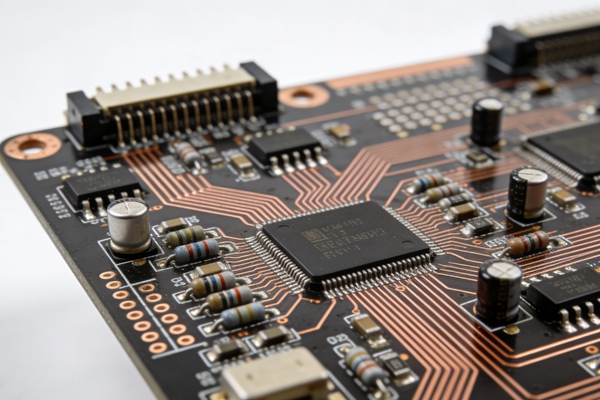
A rigid PCB is a circuit board made from solid, non-flexible substrate materials—typically FR-4—that maintains its shape throughout operation.
Key characteristics:
- Mechanical rigidity
- Multilayer support
- Mature manufacturing ecosystem
- Cost-effective at scale
Typical Rigid PCB Applications
Rigid PCBs are commonly used in:
- Consumer electronics
- Industrial control systems
- Power electronics
- Automotive ECUs
- Communication equipment
They often serve as the baseline before upgrading to HDI or flexible designs.
Basic Structure of a Rigid PCB
A standard rigid PCB consists of:
- Copper layers (signal, power, ground)
- Dielectric layers
- Core and prepreg
- Solder mask and silkscreen
Layer count typically ranges from 2 to 12+ layers.
Core Design Principles for Rigid PCBs
Simplicity First
- Avoid unnecessary complexity
- Use standard materials and rules
- Prioritize manufacturability
Clear Layer Function Definition
Common layer roles:
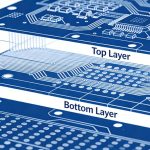
- Top/Bottom: components & routing
- Inner layers: power and ground planes
Clear separation improves signal integrity and EMI performance.
Conservative Design Rules
Rigid PCBs allow more margin than HDI:
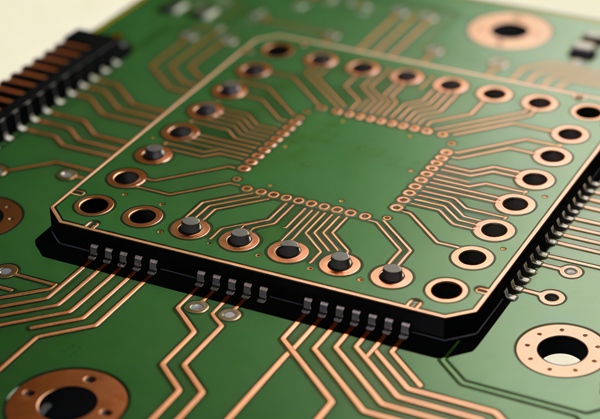
- Wider traces
- Larger vias
- Fewer lamination cycles
This improves yield and reduces cost.
When Rigid PCB Is the Right Choice
Rigid PCB design is ideal when:
- Board size is not extremely constrained
- Component pitch is moderate
- Cost efficiency is critical
- Mechanical flexibility is not required
Rigid PCB vs Other PCB Types
| PCB Type | Key Difference |
|---|---|
| HDI PCB | Higher density, higher cost |
| Flexible PCB | Bendable, higher material cost |
| Rigid-Flex PCB | Combines both, complex fabrication |
Rigid PCB remains the default unless constraints force change.
Best Practices Summary
- Start with rigid PCB unless requirements demand otherwise
- Use standard materials and stackups
- Design with DFM in mind from day one
- Leave margin for yield and reliability
Conclusion
Rigid PCB design forms the technical baseline for all other PCB technologies. A solid understanding of rigid PCB fundamentals enables better decisions when scaling to high-speed, HDI, or flexible designs.
This article establishes the foundation layer of the Rigid PCB Design content cluster.
FAQ – Rigid PCB Design Fundamentals
A: Yes. They remain the most widely used PCB type.
A: FR-4 is the most common; high-Tg variants are used for demanding environments.
A: From 2 layers to 20+ layers, depending on application.
A: Yes, both in fabrication and assembly.
A: Yes, with proper stackup and routing.