Hochfrequenz-Leiterplatte
(RF/Mikrowelle)
Rogers-, Taconic- und PTFE-Laminate von 1 GHz bis 110 GHz - intern gelagert, intern verarbeitet und vor jeder Lieferung mit TDR + VNA verifiziert.
Die Leiterplattentechnologie, mit der RF-Systeme tatsächlich funktionieren
Eine Hochfrequenz-Leiterplatte besteht aus einem speziell entwickelten, verlustarmen Laminat - Rogers, Taconic, PTFE oder keramikgefülltes PTFE - anstelle von Standard-FR4. Die Wahl des Laminats ist keine Vorliebe. Bei Frequenzen über 1 GHz führt das Standard-FR4 zu Signalverlusten und Impedanzabweichungen, die die Systemleistung in einer Weise beeinträchtigen, die durch das Schaltungsdesign nicht kompensiert werden kann.
Bei 10 GHz hat eine Leiterbahn auf Rogers 4350B etwa 5× weniger Verlust als die gleiche Leiterbahn auf FR4. Bei 77 GHz - die für Kfz-Radar verwendet werden - ist FR4 kein brauchbares Übertragungsmedium. Aufgrund der physikalischen Gegebenheiten bei der Ausbreitung von Hochfrequenzsignalen ist die Wahl des Laminats eine wichtige Designentscheidung und keine Beschaffungsvariable.
Unsere RF-Ingenieure spezifizieren das richtige Laminat für Ihr Frequenzband, Ihre thermische Umgebung und Ihr Kostenziel - und fertigen es dann, überprüfen es mit TDR und optional mit VNA vor dem Versand.
RF PCB Angebot einholen →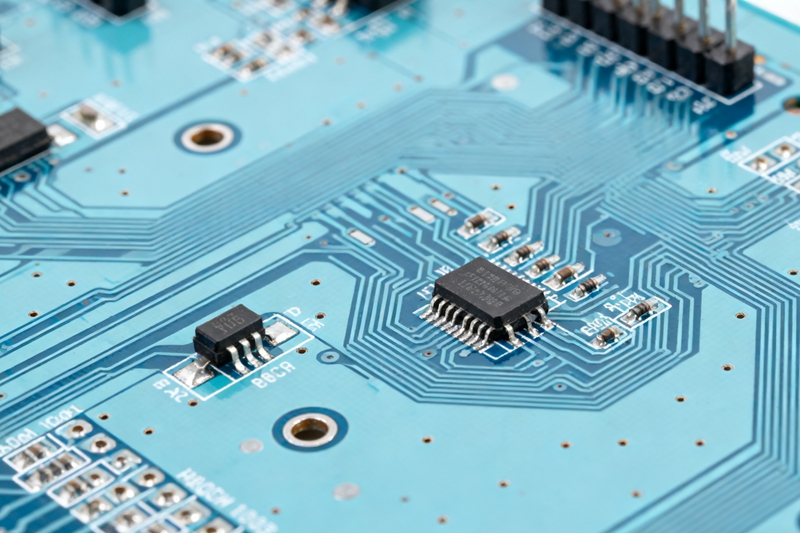
Warum FR4 bei hohen Frequenzen versagt - und was die Daten zeigen
Die Physik des dielektrischen Verlusts und der Dk-Varianz machen die Auswahl des Laminats zur wichtigsten Entscheidung beim RF-Leiterplattendesign.
Dielektrischer Verlust - FR4 gegenüber Rogers 4350B bei 10 GHz
Der Verlusttangens (tan δ) von FR4 von 0,020-0,025 verursacht eine Signaldämpfung von 1-3 dB/cm bei 10 GHz. Rogers 4350B hat tan δ = 0,0037 - ein etwa 6-fach geringerer Verlust bei der gleichen Frequenz und Geometrie. Für einen 5G-Basisstations-Leistungsverstärker wirkt sich dieser Unterschied direkt auf die Effizienz, die Wärmeabgabe und die Betriebskosten im Maßstab aus.
tan δ FR4 = 0,022 - Rogers 4350B = 0,0037 - 6× weniger DämpfungDk-Varianz - Warum die Impedanz von FR4 unberechenbar ist
Die Dielektrizitätskonstante von FR4 variiert zwischen 4,2 und 4,8 je nach Lieferant und sogar zwischen den Produktionslosen desselben Lieferanten. Eine 50 Ω-Leiterbahn, die auf einen Nennwert von Dk = 4,4 ausgelegt ist, kann bei einem anderen FR4-Los 44 Ω oder 57 Ω betragen - noch bevor die Fertigungstoleranz berücksichtigt wird. Rogers 4350B hat Dk = 3,48 ±0,05 - eng genug, um mit Zuversicht zu planen.
FR4 Dk-Abweichung ±0,3 - Rogers 4350B Dk = 3,48 ±0,05Hybrider Stackup - RF-Leistung bei kontrollierten Kosten
Die meisten gemischten RF- und Digital-Designs benötigen nicht auf jeder Lage Rogers. Äußere Lagen mit HF-Leiterbahnen verwenden Rogers oder PTFE für die Signalleistung. Die inneren digitalen Lagen, die für Taktgeber, Stromversorgungs- und Datenbusse zuständig sind, verwenden Standard-FR4 zu Standardkosten. Unser Hybrid-Stackup-Design-Service legt fest, welche Lagen verlustarmes Laminat benötigen und welche nicht - so wird die Leistung pro Dollar optimiert.
Rogers-Außenschichten - FR4-Innenschichten - Hybrid-Aufbau - kostenoptimiertVollständige PCB-Spezifikation für Hochfrequenzen
Alle RF-Laminate werden intern gelagert. TDR-Impedanzbericht wird mit jeder Bestellung mit kontrollierter Impedanz geliefert. VNA-S-Parameter sind auf Anfrage erhältlich.
Parameter für die Herstellung
| Maximale Betriebsfrequenz | Bis zu 110 GHz (Rogers 3003C / PTFE) |
| Impedanztoleranz | ±5% TDR geprüft (±3% bei Präzisionsbestellungen) |
| RF-Laminate | Rogers 4350B - RO4003C - RO3003C - Taconic TLY - PTFE |
| Anzahl der Schichten | 2 - 30 Schichten |
| Min. Spur/Leerzeichen | 2,5 / 2,5 mil (RF: ±0,5 mil Toleranz) |
Leistung und Standards
| Oberfläche | ENIG - ENEPIG - Elektrolytisches Hartgold |
| Hohlraumfräsen | Integration von Hohlleitern - Steckertaschen |
| Rückenbohrer | Entfernung von Durchkontaktierungen für digitale Hochgeschwindigkeitsschichten |
| Überprüfung | TDR Standard - VNA S-Parameter auf Anfrage |
| Prototyp-Umlaufzeit | 48h Express - 5 Tage Standard |
Wie Hochfrequenz-Leiterplatten hergestellt werden
Die Herstellung von HF-Leiterplatten kombiniert engere Prozesstoleranzen und HF-spezifische Prüfschritte, die in der Standard-Leiterplattenfertigung nicht vorhanden sind.
Auswahl und Inspektion von Laminaten
Rogers-, Taconic- oder PTFE-Laminat wird nach Dk, tan δ und CTE-Anforderungen ausgewählt. Der eingehende Dk-Wert wird vor Beginn der Produktion mit dem CoC-Wert abgeglichen.
Bildgebung und Ätzen mit engen Toleranzen
Die Leiterbahnbreite wird durch optimierte Photolithographie-Parameter auf ±0,5 mil (gegenüber ±1 mil bei FR4) gehalten. Verifiziert durch SEM-Messungen bei jeder Charge.
Fräsen und Bohren von Hohlräumen
Präzisions-CNC-Fräsen schafft Hohlleiterübergänge und Steckertaschen für mmWave-Platinen. Laserbohren für Microvias in Hybrid-Stackups.
TDR/VNA-Verifizierung
Die Impedanz jeder Platine wird mit TDR gemessen. VNA S-Parameter-Charakterisierung (Einfügungsdämpfung vs. Frequenz) ist für alle Karten verfügbar.
Wenn Hochfrequenz-Leiterplatten die erforderliche Technologie sind
Anwendungen, bei denen Standard-FR4 zu inakzeptablen Signalverlusten oder Impedanzabweichungen führt.
5G-Basisstation RF
Rogers/PTFE-Platten für 5G NR sub-6 GHz und mmWave-Funkeinheiten - Leistungsverstärker und Antenneneinspeisungen.
Kfz-Radar
77-GHz-ADAS-Radar-Frontends auf Rogers 4350B - Vorwärtskollisions-, Spurhalte- und Toter-Winkel-Systeme.
Mikrowellen-Backhaul
6-86 GHz Punkt-zu-Punkt-Backhaul-Funkgeräte, die in der Infrastruktur von Mobilfunknetzen eingesetzt werden.
Elektronische Kampfführung
Breitbandige RF-Platinen für ESM-, Stör- und Signalaufklärungssysteme über mehrere Oktav-Frequenzbereiche.
Satellitenkommunikation
Ka/Ku-Band-Transceiver-Karten für LEO/GEO-Satellitennutzlast-Elektronik und VSAT-Terminals.
Spektrumanalysatoren & VNAs
Phasenrauscharme RF-Frontends für Prüfgeräte im Bereich DC bis 110 GHz.
Medizinische Bildgebung
HF-Platinen im GHz-Bereich für MRT-Gradientenspulen-Treiber und medizinisches Radar (Atem-/Vitalzeichenerkennung).
Industrielle Radarsensoren
60-GHz- und 77-GHz-Boards für die industrielle Anwesenheitserfassung, Füllstandsmessung und Gestenerkennung.
RF-Qualität wird mit RF-Instrumenten überprüft - nicht nur optisch.
Die optische Prüfung bestätigt, dass Kupfer vorhanden ist. TDR bestätigt, dass die Impedanz korrekt ist. VNA bestätigt, dass die Einfügungsdämpfung Ihrem Verbindungsbudget entspricht. Bei Hochfrequenzplatinen wenden wir alle drei Verfahren an, denn jede ungeprüfte Leiterplattenvariable wird zu einer Variablen in Ihrem HF-System.
- ISO 9001 : 2015Von Dritten geprüftes Qualitätsmanagement
- Material CoCRogers / Taconic / PTFE Dk und tan δ pro Partie
- IPC-A-600 Klasse 2 / 3RF PCB Akzeptanzkriterien
- RoHS / REACHEinhaltung der EU-Vorschriften für gefährliche Stoffe
Inspektions- und Prüfverfahren
- TDR-Impedanz - Alle kontrollierten Bauwerke±5% pro Karte verifiziert, inklusive Bericht
- VNA S-Parameter CharakterisierungEinfügungsdämpfung vs. Frequenz - auf Anfrage
- 100% Elektrischer Test - Fliegender TastkopfAlle Netze überprüft
- 100% AOI - Alle LagenAutomatisierte optische Inspektion
- Spurbreitenmessung - SEMStatistische SPC-Daten pro Los
- Dk Verification - Material CouponPro Los, Rogers / Taconic spec check
- ENIG-Dicke - XRFGleichmäßigkeit von Ni/Au auf RF-Kontaktflächen
- Überprüfung der HohlraumtiefeGefräste Taschentiefe ±0,05 mm
Von uns gebaute Hochfrequenztafeln
Echte RF-Leiterplatten-Herausforderungen - mit Materialkenntnis und Prozesspräzision.
77 GHz ADAS-Radar-Frontend
8-Lagen Rogers 4350B, 128 Antennenzuleitungen TDR-geprüft ±4.2%, ENIG, -40°C bis +85°C, IATF 16949 Dokumentation.
Alle Antenneneinspeisungen innerhalb der Spezifikation. RF-Systemtest übertraf die Simulation um +0,8 dB Antennengewinn. IATF 16949 FAI bei der ersten Einreichung akzeptiert.
28 GHz 5G Beamforming-Karte
12-Lagen-Hybrid Rogers 4350B / FR4, 64T64R Massive MIMO, hohlraumgefräste Patch-Antennenöffnungen, 0,5 mm BGA Beamforming IC Fan-out.
RF-Systemtest übertraf die Simulation. Pünktliche Lieferung in 3 aufeinanderfolgenden Produktionsquartalen. Kunde qualifiziert HanSphere als bevorzugten Lieferanten für das 39-GHz-Programm.
67 GHz VNA RF-Front-End-Platine
20 Lagen Rogers 3003C, hohlraumgefräste Hohlleiterübergänge, elektrolytisches Hartgold an HF-Schnittstellen, VNA-geprüft pro Platine.
Einfügungsdämpfung innerhalb von 0,3 dB der Simulation bei 67 GHz. Alle Platinen werden mit individuellen VNA-Datendateien geliefert. 100% bestehen die Gerätekalibrierung ohne RF-Nachbearbeitung.
Häufige Fragen zu Hochfrequenz-Leiterplatten
Technische Fragen zur Auswahl von RF-Laminaten, Impedanzkontrolle und Herstellung.
Wir haben folgende Sorten auf Lager: Rogers 4350B (Dk 3,48, tan δ 0,0037), RO4003C (Dk 3,55, tan δ 0,0027), RO3003C (Dk 3,00, tan δ 0,0013), Taconic TLY (Dk 2,17, tan δ 0,0009), Taconic RF-35 (Dk 3,50, tan δ 0,0018), sowie PTFE-basierte Laminate für Frequenzen über 40 GHz. Material CoC mit Dk und tan δ pro Los wird bei jeder Bestellung mitgeliefert.
Unsere Standard-HF-Impedanztoleranz beträgt ±5%, die durch TDR-Messungen verifiziert und pro Leiterplatte angegeben wird. Für Präzisionsanwendungen (Testinstrumente, VNA-Platinen, präzise phasenangepasste Leitungen) ist eine Toleranz von ±3% erhältlich - dies erfordert eine Kontrolle der Leiterbahnbreite von ±0,5 mil und die Auswahl eines Dk-geprüften Laminats. Geben Sie die gewünschte Toleranz bei der Anfrage an.
Ja - vollständige 2-Port-VNA-S-Parameter-Messungen (S11, S21 Einfügedämpfung im Vergleich zur Frequenz) sind für alle Karten als optionaler Service verfügbar. Die Messdaten werden als Touchstone (.s2p)-Dateien geliefert und können direkt in Ihre RF-Simulationssoftware importiert werden, um eine Korrelation mit der Designabsicht herzustellen. Geben Sie die VNA-Messung in der Anfragephase an.
Unser Standardverfahren Rogers 4350B und RO4003C unterstützt Anwendungen bis etwa 40 GHz. Für W-Band-Anwendungen (75-110 GHz) verwenden wir Rogers RO3003C oder PTFE-basierte Laminate mit Hohlraumfräsen für die Wellenleiterintegration. Die praktische Obergrenze hängt von der Wahl des Laminats, der Rauheit der Kupferoberfläche bei mmWave-Frequenzen und der Schnittstellengeometrie des Steckers ab.
Ein hybrider Aufbau verwendet verlustarme HF-Laminate (Rogers, PTFE) auf den äußeren Lagen, in denen die HF-Leiterbahnen verlegt sind, und Standard-FR4- oder Hoch-Tg-Laminate auf den inneren Lagen für digitale Strom- und Datensignale. Dies bietet HF-Leistung dort, wo es auf die Signalqualität ankommt (äußere HF-Leiterbahnen), und senkt gleichzeitig die Kosten gegenüber einer reinen Rogers-Konstruktion erheblich. Unsere HF-Ingenieure entwerfen routinemäßig Hybrid-Stacks für 5G- und ADAS-Radaranwendungen.
Ja - CNC-Hohlraumfräsen ist ein Standardservice für mmWave-Platinen, die vertiefte Steckverbindereinführungsbereiche, Hohlleiterübergänge und Wärmespreiztaschen erfordern. Die Toleranz der Kavitätstiefe beträgt ±0,05 mm, die Wandvertikalität ±2°. Hohlraumzeichnungen sollten als separate mechanische Ebene im Gerber/ODB++-Paket bereitgestellt werden. Fotos und Maßprüfungsberichte sind für Hohlraumlose erhältlich.
Lassen Sie Ihr RF PCB Design noch heute überprüfen.
Senden Sie uns Ihre Gerbers und Stackup-Anforderungen. Unsere RF-Ingenieure prüfen die Laminatauswahl, die Leiterbahngeometrie und die Durchkontaktierung innerhalb von 8 Stunden.
- DFM-Prüfung bei jeder Anfrage inbegriffen
- NDA auf Anfrage unterzeichnet - gängige Praxis
- Antwort innerhalb von 8 Arbeitsstunden
- 48-Stunden-Express-Prototyp verfügbar
- Unverbindliches Angebot anfordern
Angebot anfordern
Füllen Sie die nachstehenden Felder aus, und wir werden uns in Kürze mit Ihnen in Verbindung setzen.