Starre PCB
(Mehrschichtig)
Von 2-Lagen-Prototypen bis hin zu 32-Lagen-Hochgeschwindigkeitsserverplatinen - die Grundlage jedes elektronischen Systems, gebaut nach den Spezifikationen, die Ihr Design tatsächlich erfordert.
Das Arbeitspferd Kartentechnologie - richtig gebaut für Ihre Anwendung
Eine starre Multilayer-Leiterplatte ist ein Stapel kupferkaschierter Laminate (Kerne) und klebender Prepreg-Lagen, die unter Hitze und Druck zu einer einzigen starren Platte zusammengepresst werden. Durchkontaktierungen und Blind Vias verbinden die Lagen entsprechend dem Schaltungsdesign.
Das Wort 'Standard' ist irreführend. Materialauswahl, Aufbau und Herstellungsverfahren variieren von Anbieter zu Anbieter enorm - und diese Variablen bestimmen direkt die Signalleistung, thermische Zuverlässigkeit und Lebensdauer.
Von Standard-FR4 für Büroelektronik bis hin zu Polyimid mit hoher Tg für Leiterplatten im Motorraum von Kraftfahrzeugen und Rogers-Laminaten für HF-Designs - die richtige Spezifikation beginnt mit einer DFM-Prüfung, die den Stapelaufbau und nicht nur den DRC überprüft.
Angebot für starre Leiterplatten einholen →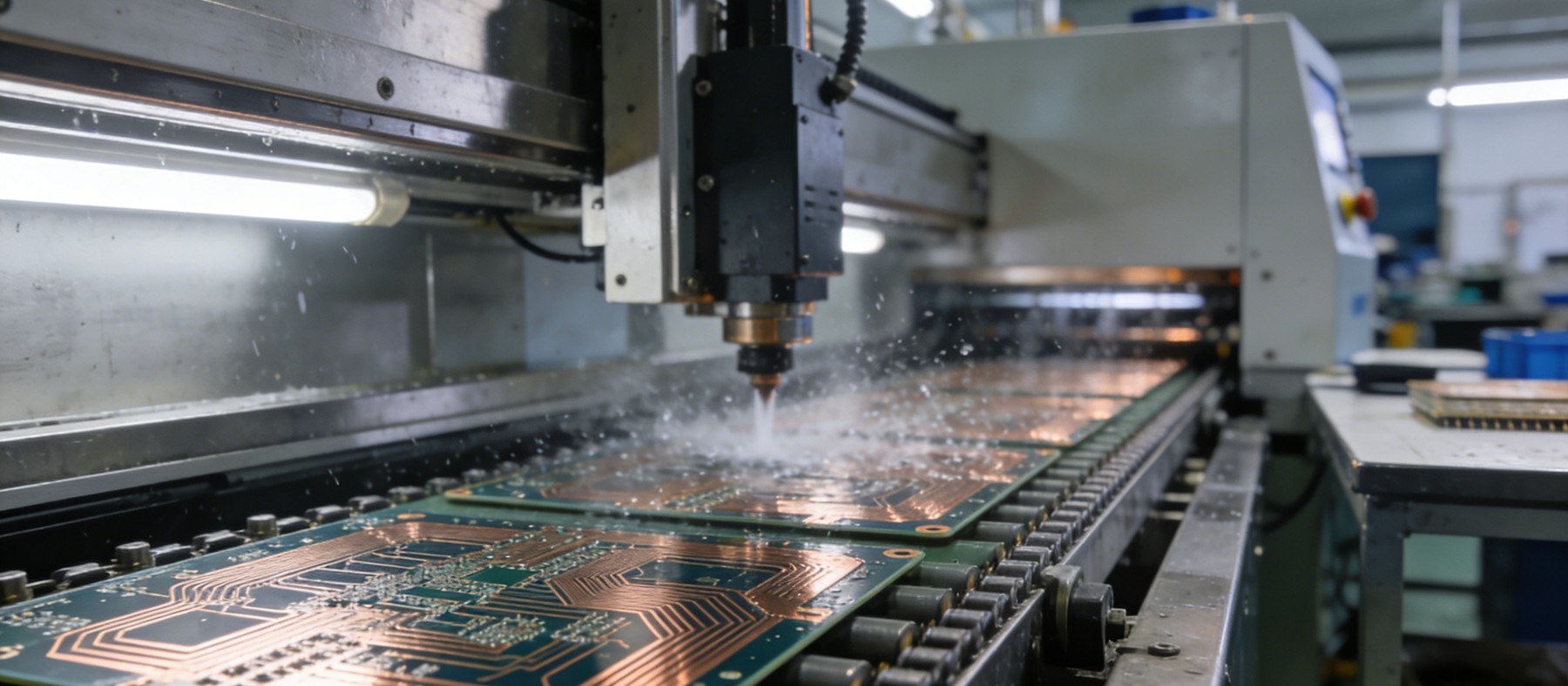
Drei Spezifikationsentscheidungen, die die Leistung starrer Leiterplatten bestimmen
Zwei identische Schemata, die auf verschiedenen Stackups aufgebaut sind, werden unterschiedlich funktionieren. Dies sind die Variablen, die am wichtigsten sind.
Stackup-Design steuert die Impedanz - und die Impedanz steuert die Signalqualität
Jede Hochgeschwindigkeitsbahn auf einer Leiterplatte ist eine Übertragungsleitung. Ihre charakteristische Impedanz wird durch die Leiterbahnbreite, die dielektrische Dicke und das Laminat Dk bestimmt - Variablen, die im Stackup-Design-Schritt ausgewählt werden, bevor die Fertigung beginnt. Ein Stackup, das nicht anhand Ihrer Zielvorgaben für die Signalgeschwindigkeit überprüft wurde, führt zu einer Leiterplatte, die nicht immer die Simulationsergebnisse liefert.
kontrollierte Impedanz - Dk gegen Frequenz - TDR-Verifizierung - ±5% ToleranzMaterialauswahl für Temperatur, Luftfeuchtigkeit und chemische Umgebung
Standard-FR4 kommt mit Bürotemperaturen und mäßiger Luftfeuchtigkeit gut zurecht. Leiterplatten für den Motorraum von Kraftfahrzeugen, die ständig 125 °C ausgesetzt sind, benötigen FR4 mit hoher Tg (Tg 170-220 °C) oder Polyimid. Industrielle Leiterplatten für den Außenbereich, die Kondenswasser ausgesetzt sind, benötigen Laminate mit geringer Wasserabsorption. Die Wahl des falschen Basismaterials ist die häufigste Ursache für ein vorzeitiges Versagen von Leiterplatten in der Praxis.
FR4 mit hohem Tg-Wert - Polyimid - geringe Wasseraufnahme - halogenfreie OptionenDie Dicke des Kupferrohrs bestimmt die Langzeitzuverlässigkeit von Via
Eine Leiterplatte, die den elektrischen Test am ersten Tag bestanden hat, kann nach 500 thermischen Zyklen immer noch versagen, wenn die Dicke der Durchkontaktierung gering ist. IPC-6012 schreibt eine Mindestkupferdicke in den Durchkontaktierungen vor (durchschnittlich mindestens 18 µm). Nur eine Schliffbildanalyse kann bestätigen, dass dies erreicht wurde. Wir führen bei jeder Produktionscharge eine Schliffbildanalyse durch - nicht als Aufpreis, sondern als grundlegende Qualitätsanforderung.
IPC-6012 Via Barrel - 18 µm min Cu - Mikroschliff QC - thermische LebensdauerVollständige Spezifikation für die Herstellung von starren Leiterplatten
Alle Prozessparameter werden durch unser ISO 9001 QMS überprüft. Ein TDR-Impedanzbericht wird mit jeder Bestellung von kontrollierter Impedanz geliefert.
Parameter für die Herstellung
| Anzahl der Schichten | 2 - 32 Schichten |
| Min. Spur/Leerzeichen | 2,5 / 2,5 mil |
| Min. Größe des Lochs | 0,20 mm mechanisch - 0,10 mm Laser |
| Kupfer Gewicht | 0,5 Unzen - 20 Unzen |
| Dicke der Platte | 0,4 mm - 6,4 mm |
Leistung und Standards
| Kontrollierte Impedanz | ±5% TDR geprüft |
| Laminat-Optionen | FR4 - Hoch-Tg - Polyimid - Rogers - Halogenfrei |
| Oberfläche | HASL - ENIG - ENEPIG - OSP - Immersion Ag |
| IPC Build Standard | Klasse 2 standardmäßig - Klasse 3 auf Anfrage |
| Prototyp-Umlaufzeit | 48h Express - 5 Tage Standard |
Wie eine mehrlagige Leiterplatte hergestellt wird
Mehr Prozessschritte als bei den meisten Elektronikherstellern - jeder einzelne beeinflusst die Zuverlässigkeit der endgültigen Leiterplatte.
Inner Layer Imaging & Ätzen
Das kupferkaschierte Laminat wird fotolithografisch bebildert und in das endgültige Muster der Innenschichten geätzt. Die Oxidbehandlung bereitet die Oberflächen für die Laminierung vor.
Stack-up-Presse
Innenkerne, Prepreg und Kupferfolien werden präzise ausgerichtet und bei 175-220°C unter 350 psi heißgepresst. Der Harzfluss füllt alle Hohlräume und verbindet die Schichten dauerhaft.
Bohren & Abschmieren
Die Durchgangslöcher werden mit Hartmetallbohrern CNC-gebohrt. Durch Plasmabehandlung wird das Epoxidharz von den Wänden der Durchgangslöcher entfernt, um die Haftung des Kupfers an den Innenlagen zu gewährleisten.
Beschichtung, Bildgebung und Finish
Stromlose und dann elektrolytische Kupferplatten über Wände nach IPC-6012 Spezifikation. Abbildung der Außenschicht, ENIG/OSP-Finish und elektrische Prüfung vervollständigen den Prozess.
Wo starre Mehrlagenleiterplatten die richtige Wahl sind
Standardmäßige starre Multilayer sind die Grundlage für praktisch jedes elektronische Produkt - die Spezifikation ist das, was variiert.
Industrielle Steuerungen & PLCs
Hoch-Tg-Multilayer für PLCs, Bewegungssteuerungen und Industriecomputer in Umgebungen mit hohen Temperaturen.
Server & Netzwerke
High-Layer-Count-Boards für Server-CPUs, Switch-ASICs und Linecards mit DDR5, PCIe 5.0 und 400G Ethernet.
Kfz-ECU
Hochzuverlässiger Multilayer für Motorsteuerung, Karosseriesteuerung und ADAS-Verarbeitung über den gesamten automobilen Temperaturbereich.
Medizinische Instrumente
IPC Klasse 3 Multilayer für bildgebende Systeme, Patientenmonitore und chirurgische Geräte.
Leistungselektronik
Schwerer Kupfer-Multilayer für Motorantriebe, Stromrichter und USV-Systeme mit Hochstromschienen.
Telekommunikationsinfrastruktur
High-Layer-Backplane- und Line-Card-Karten für DSLAM-, OLT- und Routing-Ausrüstung.
Unterhaltungselektronik
Kostengünstiger Multilayer für Smart-TVs, Set-Top-Boxen und Haushaltsgeräte.
Verteidigungselektronik
Polyimid-Multilayer für Militärelektronik, die einen erweiterten Temperaturbereich und IPC-Klasse 3 erfordert.
Strenge PCB-Qualität - von der Überprüfung des Stapels bis zur Verifizierung der Via Barrel.
Die Qualität einer starren Leiterplatte beginnt vor der Fertigung. Unsere DFM-Prüfung deckt Stapelungs- und Materialprobleme auf, bevor Kupfer geätzt wird. Nach der Fertigung bestätigen der 100% e-Test und die selektive Mikrosektion die Qualität der Via Barrel bei jedem Los.
- ISO 9001 : 2015Von Dritten geprüftes Qualitätsmanagement
- IPC-6012Qualifizierung und Leistung von starren PCB
- IPC-A-600 Klasse 2 / 3Akzeptanzkriterien
- RoHS / REACHEinhaltung der EU-Vorschriften für gefährliche Stoffe
Inspektions- und Prüfverfahren
- 100% Elektrischer Test - Fliegender Tastkopf / HalterungOffen / Kurzschluss auf allen Netzen
- 100% AOI - Alle LagenAutomatisierte optische Inspektion
- Impedanztest - TDR±5% geprüft pro Produktionslos
- Mikroschliff & QuerschnittsanalyseKupferdicke der Via-Trommel nach IPC-6012
- Schleife und DrehungIPC-TM-650 2.4.22
- Stärke des PeelingsKupferhaftung nach IPC-TM-650 2.4.8
- Thermische Belastung Schwebetest288°C Lötschwimmer nach IPC-TM-650 2.6.8
- IonenchromatographieIonische Sauberkeit auf Anfrage
Starre Bretter, die wir gebaut haben
Echte Herausforderungen in der Mehrschichtfertigung - gelöst.
16-Lagen High-Tg Industrial PLC Board
Tg 180°C Laminat, ±5% Impedanz auf Ethernet und Feldbus, IPC Klasse 3, Betrieb in einem Stahlwerk bei 85°C Dauerumgebung.
Hat 1.000 Thermoschockzyklen von -40°C bis +85°C bestanden. Keine PCB-bedingten Ausfälle im Feld in 5 Jahren Einsatz im Stahlwerk.
28-Layer-Switchkarte für Rechenzentren
PCIe 5.0, DDR5-6400 und 400GbE-Signale, rückseitig gebohrte Via-Stubs, Isola I-Tera Low-Dk-Laminat, ±5% Impedanz auf allen Hochgeschwindigkeitsleitungen.
PCIe 5.0 Augendiagramm erfüllt Spezifikation mit 18% Marge. NEBS Level 3 Qualifikation im ersten Anlauf bestanden.
12-Schicht-Kraftfahrzeug-BCM
Hoch-Tg FR4, -40°C bis +125°C, IPC Klasse 2, IATF 16949 Dokumentationsgehäuse, konforme Beschichtung-kompatibler Aufbau.
FAI bei der ersten Einreichung akzeptiert. 3 Jahre in der Produktion mit null PCB-bedingten Rücksendungen.
Häufige Fragen zu Rigid Multilayer PCB
Technische Fragen zur Herstellung von mehrlagigen Leiterplatten, Materialien und Qualität.
Unsere standardmäßige kontrollierte Impedanztoleranz beträgt ±5%, die durch TDR-Messungen überprüft und bei jeder Bestellung angegeben wird. Engere Toleranzen von ±3% sind auf Anfrage für Anwendungen wie Test- und Messinstrumente oder Ultra-High-Speed-Serverplatinen erhältlich - diese erfordern eine engere Kontrolle der Leiterbahnbreite (±0,5 mil) und Laminate mit geringer Dk-Varianz wie Isola I-Tera oder Rogers 4350B.
Wir führen und verarbeiten: FR4 mit hoher Tg (Tg 150°C / 170°C / 180°C), Polyimid (Tg 260°C+), halogenfreies FR4, Rogers 4350B / RO4003C für RF-Anwendungen, Isola I-Tera MT40 für digitale Hochgeschwindigkeitsanwendungen und spezielle Low-Dk-Laminate für anspruchsvolle Anforderungen an die Signalintegrität. Die Auswahl der Laminate wird während des DFM-Prozesses überprüft und die Material-CoC wird mit jeder Bestellung mitgeliefert.
Unsere maximale Lagenzahl beträgt 32 Lagen für die standardmäßige sequentielle Konstruktion von starren Multilayern. Bei Konstruktionen mit mehr als 20 Lagen empfehlen wir, sich bereits in der Anfragephase mit unserem technischen Team in Verbindung zu setzen, um die Via-Strategie, Stapeloptionen und Auswirkungen auf die Vorlaufzeit zu besprechen. Blind- und Buried-Via-Designs werden bis zu 30 Lagen unterstützt.
Unser minimaler mechanisch gebohrter Lochdurchmesser beträgt 0,20 mm bei einem maximalen Seitenverhältnis (Plattendicke : Lochdurchmesser) von 12:1. Bei kleineren Löchern erreicht das Laserbohren einen Durchmesser von 0,10 mm. Für Leiterplatten, die Durchgangslöcher mit einem hohen Aspektverhältnis erfordern (z. B. >3,2 mm dick mit kleinen Durchgangsdurchmessern), wenden Sie sich bitte vor der Bestellung an unser Ingenieursteam zur Überprüfung des Stackups.
Wir bieten Kupfergewichte von 0,5 oz (17 µm) für feine HDI-Innenlagen bis zu 20 oz (700 µm) für schwere Kupfer-Strombusplatinen. Standardoptionen sind 1 oz und 2 oz für Außenlagen, 0,5 oz und 1 oz für Innenlagen. Schwere Kupferdesigns (>3 oz) erfordern eine besondere Handhabung im Ätz- und Belichtungsprozess und werden mit verlängerter Vorlaufzeit angeboten.
Die Kupferdicke der Durchkontaktierungen wird durch eine Mikroschliff-Analyse überprüft - ein physikalischer Querschnitt repräsentativer Durchkontaktierungen aus jeder Produktionscharge. Die Mindestkupferdicke in Durchkontaktierungen beträgt 18 µm gemäß den Anforderungen der IPC-6012 Klasse B/C. Mikroschliffberichte, die die durchschnittlichen, minimalen und maximalen Kupferwerte der Barrel zeigen, sind in unserem Qualitätsdokumentationspaket für jedes Los enthalten.
Lassen Sie Ihren starren Leiterplattenstapel überprüfen - noch heute.
Senden Sie uns Ihre Gerber- und Stackup-Anforderungen. Unsere Ingenieure prüfen Impedanzziele, Materialauswahl und Seitenverhältnisse innerhalb von 8 Stunden.
- DFM-Prüfung bei jeder Anfrage inbegriffen
- NDA auf Anfrage unterzeichnet - gängige Praxis
- Antwort innerhalb von 8 Arbeitsstunden
- 48-Stunden-Express-Prototyp verfügbar
- Unverbindliches Angebot anfordern
Angebot anfordern
Füllen Sie die nachstehenden Felder aus, und wir werden uns in Kürze mit Ihnen in Verbindung setzen.