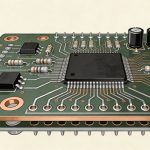
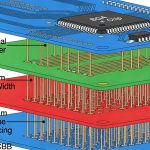
Terms such as PCB substrate and PCB laminate appear frequently in PCB datasheets, material specifications, and manufacturing documents. Because they are closely related, they are often used interchangeably.
In practice, however, they describe different aspects of the materials used to build a printed circuit board.
Understanding the distinction helps engineers communicate more clearly with PCB manufacturers, compare material specifications more accurately, and make better material selections for different applications.
What Is a PCB Substrate?
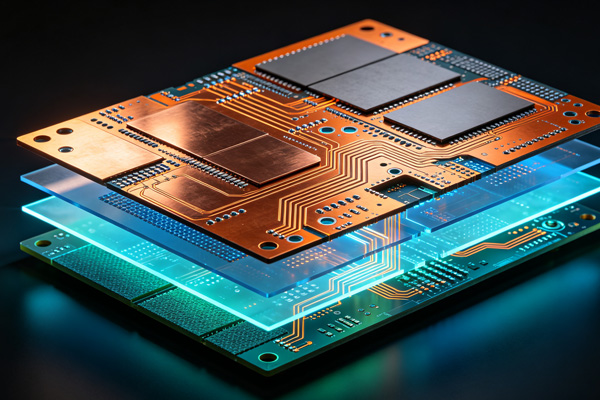
A PCB substrate is the insulating base that supports the conductive copper circuits.
It provides the board with:
- Mechanical strength
- Electrical insulation
- Dimensional stability
- Thermal support
The substrate remains part of the finished PCB throughout its service life.
Depending on the application, a substrate may be made from:
- FR4
- High-Tg epoxy
- Rogers laminates
- PTFE
- Polyimide
- Ceramic
- Aluminum-based materials
Related reading:
What Is a PCB Laminate?
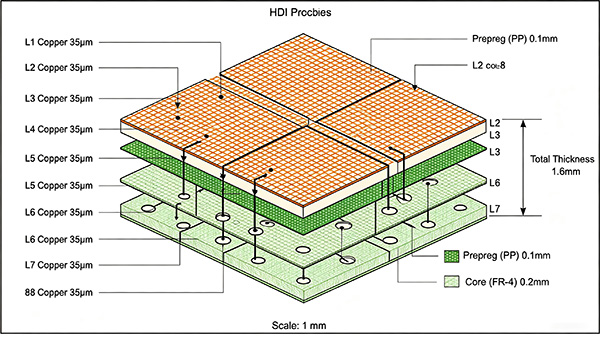
A PCB laminate is the manufactured sheet created by bonding reinforcing materials, resin, and copper foil together under heat and pressure.
It is the physical material supplied to PCB fabricators before circuit patterns are created.
A laminate normally consists of:
- Reinforcement material (such as fiberglass)
- Resin system
- Copper foil
The laminate is processed into the finished substrate during PCB fabrication.
Are the Two Terms the Same?
In many technical discussions, the two terms refer to the same physical material.
However, their emphasis is different.
- Substrate describes the insulating foundation of the completed PCB.
- Laminate describes the manufactured material used to produce that substrate.
Because of this relationship, many suppliers use both terms depending on the context.
Where the Terms Are Commonly Used
Understanding the context makes the terminology easier to interpret.
PCB Design
Design engineers often refer to the substrate when discussing electrical performance, dielectric properties, or thermal characteristics.
Examples include:
- substrate thickness
- substrate dielectric constant
- substrate thermal conductivity
PCB Manufacturing
Material suppliers and fabricators more frequently use laminate when describing raw materials.
Examples include:
- laminate thickness
- laminate construction
- laminate manufacturer
- laminate specification
Although the wording changes, both terms usually refer to the same family of materials.
Common PCB Substrate and Laminate Materials
The electronics industry uses several types of substrates and laminates depending on application requirements.
FR4
The most widely used material for commercial and industrial electronics.
High-Tg Materials
Designed for products requiring improved thermal stability.
Rogers Materials
Optimized for RF and high-frequency circuits.
PTFE
Selected for microwave and millimeter-wave applications where dielectric loss must be minimized.
Polyimide
Used in flexible and rigid-flex PCB designs.
Ceramic
Provides excellent thermal conductivity and electrical insulation for high-power and high-reliability products.
Related reading:
- High-Tg PCB Material for High-Temperature and Reliable PCB Applications
- FR4 vs Rogers PCB for High-Frequency Design
- Low-Loss PCB Materials for RF and Microwave Circuits
Why the Difference Matters
Although the distinction is subtle, using the correct terminology improves communication between designers, purchasers, and manufacturers.
For example:
- Material data sheets usually describe laminate specifications.
- Product design documents often refer to substrate characteristics.
- PCB stackup documentation may include both terms.
Understanding the terminology helps reduce misunderstandings during material selection and manufacturing.
How Substrate and Laminate Affect PCB Performance
Regardless of the terminology used, the material influences many aspects of PCB performance.
Electrical Performance
Dielectric properties affect impedance, signal integrity, and insertion loss.
Thermal Performance
Material selection influences heat transfer and operating temperature.
Mechanical Stability
The substrate supports the PCB during fabrication and long-term operation.
Manufacturing Quality
High-quality laminates improve drilling accuracy, layer registration, and plating consistency.
Choosing the Right Material
Whether described as a substrate or laminate, the selection process should always begin with the product’s technical requirements.
Consider:
- Operating frequency
- Maximum operating temperature
- Layer count
- Thermal management
- Mechanical requirements
- Manufacturing budget
Choosing the right material early in the design process can reduce production risks and improve long-term product reliability.
How to Select a PCB Substrate
- Step 1
Identify the electrical and thermal requirements of the application.
- Step 2
Review material properties such as dielectric constant, thermal conductivity, and glass transition temperature.
- Step 3
Match the material to the required PCB structure and manufacturing process.
- Step 4
Confirm the final laminate specification with your PCB manufacturer before production begins.
Conclusion
PCB substrate and PCB laminate are closely related terms that describe different perspectives of the same material system.
The substrate refers to the insulating base within the finished circuit board, while the laminate describes the manufactured material supplied for PCB fabrication.
Understanding the difference helps engineers interpret technical documentation, compare materials more accurately, and communicate more effectively with PCB manufacturers throughout the design and production process.
Frequently Asked Questions
A: They are closely related. A laminate is the manufactured material used to build the PCB, while the substrate refers to the insulating base in the finished board.
A: FR4 is the most widely used substrate because it provides a good balance of electrical performance, mechanical strength, and cost.
A: Yes. Common alternatives include High-Tg laminates, Rogers materials, PTFE, Polyimide, Ceramic, and Aluminum-based substrates.
A: Laminate refers to the raw material supplied before PCB fabrication, making it the preferred term in material specifications and manufacturing documents.
A: Evaluate the operating environment, signal frequency, thermal requirements, layer count, and manufacturing budget, then select the material that best fits those requirements.