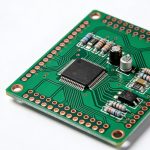
Standard FR4 meets the needs of many electronic products, from consumer devices to industrial controllers. It offers good electrical performance, reliable mechanical strength, and competitive manufacturing costs.
However, some applications place greater demands on the PCB than standard FR4 is designed to handle. Higher operating temperatures, repeated thermal cycling, multilayer constructions, and lead-free assembly processes can all increase stress on the laminate.
In these situations, choosing High-Tg PCB material can improve long-term reliability without significantly changing the manufacturing process.
The key is knowing when the additional performance justifies the higher material cost.
Why Material Selection Matters
Selecting a PCB laminate is more than choosing a board that can support copper traces.
The substrate influences:
- thermal stability
- dimensional accuracy
- mechanical strength
- manufacturing reliability
- product service life
A material that performs well under one set of conditions may not be the best option for another.
Choosing the correct laminate early in the design stage helps reduce manufacturing risks and minimizes costly redesigns.
Related reading:
High-Tg PCB Material for High-Temperature and Reliable PCB Applications
Products That Benefit from High-Tg Materials
Not every PCB requires a high glass transition temperature.
High-Tg materials are generally selected when the operating environment or manufacturing process creates additional thermal stress.
Typical examples include:
- automotive electronics
- industrial automation equipment
- power supplies
- communication infrastructure
- renewable energy systems
- medical equipment with continuous operation
These products often experience higher temperatures or longer service lives than typical consumer electronics.
High Operating Temperatures
One of the most common reasons for selecting High-Tg material is elevated operating temperature.
When a PCB is exposed to heat for extended periods, the epoxy resin gradually approaches its thermal limits.
A higher-Tg laminate maintains better mechanical stability under these conditions and reduces the risk of long-term material degradation.
Multiple Lead-Free Soldering Cycles
Modern electronics frequently undergo more than one soldering process.
Examples include:
- double-sided assembly
- selective soldering
- component rework
Each heating cycle places additional stress on the laminate.
High-Tg materials are better suited to repeated exposure to lead-free reflow temperatures, helping maintain board stability throughout production.
Multilayer PCB Construction
As PCB layer counts increase, the manufacturing process becomes more demanding.
Repeated lamination, drilling, and plating introduce thermal and mechanical stress into the board.
High-Tg laminates provide improved dimensional stability, making them a common choice for complex multilayer PCBs.
Related reading:
Multilayer PCB Design Guide
Long Product Life
Products designed for ten or more years of operation often require higher material reliability.
Examples include:
- industrial control systems
- telecommunications equipment
- transportation electronics
Using a laminate with better thermal endurance helps reduce material fatigue over the product’s lifetime.
Harsh Operating Environments
Environmental conditions also influence material selection.
Applications exposed to:
- frequent temperature changes
- continuous operation
- high humidity
- vibration
may benefit from the improved stability offered by High-Tg laminates.
Material selection should always reflect the actual operating conditions rather than the product category alone.
When Standard FR4 Is Sufficient
Despite the advantages of High-Tg materials, standard FR4 remains the most practical choice for many designs.
It is commonly used in:
- consumer electronics
- office equipment
- household appliances
- general industrial products with moderate temperatures
If the product does not experience significant thermal stress, the additional cost of High-Tg material may not provide measurable benefits.
Related reading: FR4 PCB vs High-Tg FR4
Factors to Review Before Selecting High-Tg Material
Material selection should be based on objective design requirements.
Questions worth considering include:
- What is the highest operating temperature?
- Will the board experience repeated thermal cycling?
- How many assembly processes will the PCB undergo?
- Is long-term reliability a primary requirement?
- Does the product operate in a harsh environment?
Answering these questions helps determine whether standard FR4 or High-Tg laminate is the more appropriate choice.
How to Decide Whether High-Tg Material Is Needed
- Step 1
Review the expected operating temperature throughout the product’s service life.
- Step 2
Consider the manufacturing process, including lead-free soldering and possible rework.
- Step 3
Evaluate the complexity of the PCB, including layer count and component density.
- Step 4
Discuss laminate recommendations with your PCB manufacturer before finalizing material specifications.
Common Misunderstandings
A common misconception is that High-Tg material is always better than standard FR4.
In practice, the best material depends on the application.
Another misunderstanding is that High-Tg laminates eliminate all thermal problems.
Good thermal management still depends on PCB layout, copper distribution, component placement, and cooling methods.
The laminate is only one part of the overall design.
Conclusion
High-Tg PCB material becomes valuable when a product is exposed to elevated temperatures, repeated thermal cycling, or demanding manufacturing conditions.
For many consumer and commercial products, standard FR4 remains the most economical and reliable solution.
Selecting the right material should always begin with understanding the operating environment, manufacturing process, and reliability expectations of the final product.
How to Choose the Right PCB Material
Step 1
Define the thermal requirements of the application.
Step 2
Review manufacturing processes such as lead-free soldering and possible rework.
Step 3
Consider product lifetime and environmental conditions.
Step 4
Compare standard FR4 and High-Tg materials with your PCB supplier before making the final selection.
Frequently Asked Questions
A: High-Tg material is recommended for products that experience high operating temperatures, repeated thermal cycling, multilayer construction, or lead-free assembly.
A: No. Many multilayer PCBs perform well with standard FR4 if thermal requirements are moderate.
A: In applications with significant thermal stress, High-Tg laminates can improve dimensional stability and long-term reliability.
A: Yes. High-Tg laminates generally have a higher material cost, so they are best used where their additional thermal performance provides clear value.
A: For many commercial applications it can. The choice depends on operating temperature, manufacturing conditions, and reliability requirements rather than cost alone.