When selecting PCB materials, cost is always part of the decision.
Standard FR4 is widely used because it is affordable and meets the requirements of most electronic products. High-Tg PCB materials, on the other hand, are designed for higher thermal stability and improved reliability in demanding environments.
The trade-off is straightforward: better thermal performance usually comes with higher material cost.
However, the real cost difference is often misunderstood.
It is not only about raw material price, but also manufacturing conditions, yield, and application requirements.
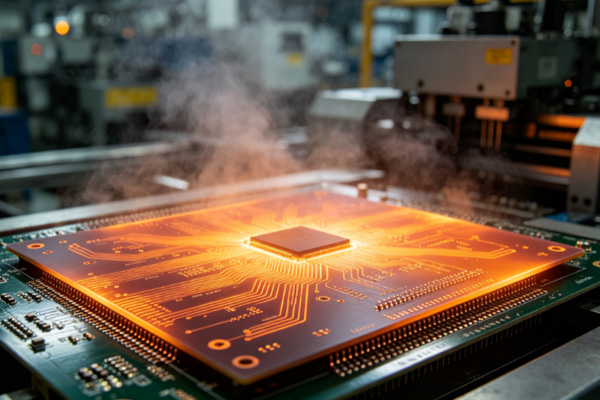
Why High-Tg Materials Cost More
High-Tg laminates are engineered with improved resin systems that can withstand higher temperatures without losing mechanical stability.
This improved performance comes from:
- more advanced epoxy formulations
- tighter material processing control
- higher-grade fiberglass reinforcement
- stricter quality consistency requirements
These factors increase base material cost compared with standard FR4.
However, material cost is only one part of the total PCB manufacturing cost.
Material Cost Difference
In most PCB manufacturing scenarios, High-Tg material costs more than standard FR4.
The difference typically comes from:
- raw laminate price
- availability of specific Tg grades
- supplier selection
For low-volume prototype production, the cost difference may appear more noticeable because setup costs are distributed across fewer boards.
For mass production, the difference becomes more stable and predictable.
Manufacturing Impact
High-Tg materials are compatible with standard PCB manufacturing processes, but they may slightly affect processing conditions.
For example:
- lamination pressure control becomes more important
- drilling wear may increase slightly
- thermal profiling during processing may need adjustment
These factors can influence manufacturing yield and process optimization.
In well-controlled production environments, the impact is usually minimal, but it still contributes to overall cost structure.
Cost vs Reliability Trade-off
The real question is not whether High-Tg costs more, but whether it prevents future failure or redesign.
In some applications, standard FR4 performs perfectly well and upgrading provides no measurable benefit.
In other cases, such as high-temperature or high-reliability environments, the additional material cost is small compared to the cost of failure.
Typical considerations include:
- product lifetime requirement
- operating temperature range
- number of thermal cycles
- field reliability expectations
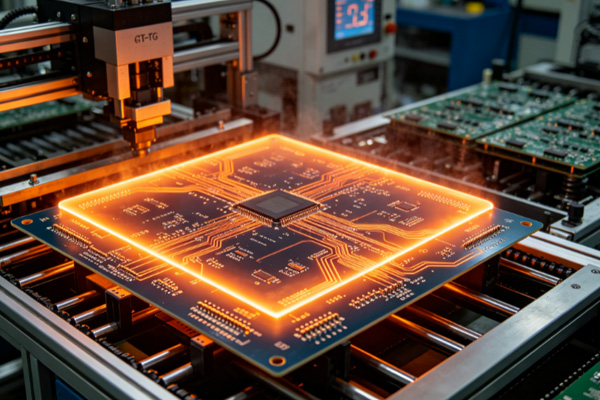
When Standard FR4 Is More Cost Effective
Standard FR4 is the most economical choice when:
- operating temperature is moderate
- product lifecycle is not extreme
- no repeated high-temperature cycles are expected
- consumer electronics or general industrial use cases
In these scenarios, upgrading to High-Tg material may increase cost without improving performance in a meaningful way.
Related reading:
FR4 PCB vs High-Tg FR4
When High-Tg Becomes Worth the Cost
High-Tg material becomes cost-effective when it helps avoid failure risks or improves long-term reliability.
Typical cases include:
- automotive electronics
- industrial automation systems
- power electronics
- multilayer complex PCBs
- lead-free high-temperature assembly
In these applications, the cost of field failure is far higher than the material upgrade itself.
Hidden Cost Factors Often Ignored
Many engineers only compare laminate price, but actual cost differences come from multiple layers.
Yield Rate
More stable materials can reduce rework and scrap in complex designs.
Thermal Processing Stability
High-Tg materials behave more consistently during repeated thermal cycles.
Long-Term Reliability
Reduced failure rates in the field indirectly lower total lifecycle cost.
How Engineers Should Evaluate Cost
Step 1
Define operating temperature and environmental conditions.
Step 2
Estimate expected product lifetime and reliability requirements.
Step 3
Evaluate manufacturing complexity (layer count, density, assembly cycles).
Step 4
Compare total lifecycle cost, not just material price.
Common Misunderstandings
One common misconception is that High-Tg always makes the PCB “better.”
In reality, it only improves thermal stability, not every aspect of performance.
Another misunderstanding is that cost difference is always large.
In many production cases, the material cost gap is smaller than expected, especially in medium to high-volume manufacturing.
Conclusion
High-Tg PCB materials do cost more than standard FR4, but the difference should not be evaluated only at the material level.
The real consideration is whether improved thermal stability and reliability justify the total lifecycle cost.
For many standard applications, FR4 remains the most practical option. For demanding environments, High-Tg provides valuable reliability benefits that outweigh its additional cost.
Material selection should always be based on performance requirements, not price alone.
How to Decide Between High-Tg and FR4
- Step 1
Check operating temperature requirements.
- Step 2
Evaluate reliability expectations of the product.
- Step 3
Analyze manufacturing complexity and thermal stress.
- Step 4
Compare total cost impact, including potential failure risk.
Frequently Asked Questions
A: Yes, but the difference varies depending on volume, supplier, and laminate grade.
A: It improves thermal stability and reliability but does not automatically improve electrical performance.
A: When operating temperatures are low and the product does not require high thermal endurance.
A: Because they reduce risk in high-temperature processes and improve long-term reliability in demanding applications.
A: No. Material selection should be based on application requirements, not price alone.