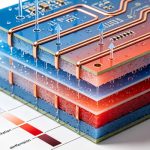
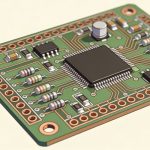
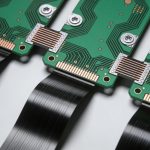
Standard FR4 is suitable for many PCB applications, but not every product operates under normal conditions.
Electronics installed in vehicles, industrial equipment, power supplies, and communication systems may experience continuous heat, repeated thermal cycling, or multiple soldering processes during manufacturing.
Under these conditions, the choice of laminate becomes more important.
High-Tg PCB material was developed to improve thermal stability without requiring a completely different manufacturing process. It offers better resistance to heat while remaining compatible with conventional PCB fabrication techniques.
For many high-reliability products, it has become the preferred alternative to standard FR4.
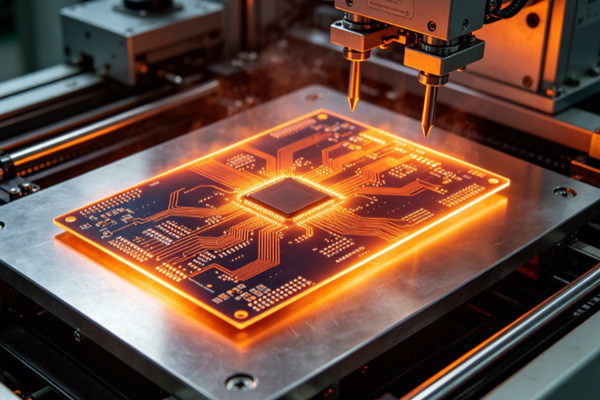
What High-Tg PCB Material Is
High-Tg PCB material is a fiberglass-reinforced epoxy laminate with a higher glass transition temperature (Tg) than standard FR4.
The glass transition temperature is the point at which the epoxy resin begins to soften and its mechanical properties start to change.
A higher Tg does not mean the board can operate continuously at that temperature. Instead, it indicates that the laminate maintains its rigidity and dimensional stability over a wider temperature range.
This makes High-Tg materials better suited to applications that experience frequent heating and cooling.
Why Glass Transition Temperature Matters
During manufacturing and normal operation, a PCB is exposed to heat many times.
Examples include:
- multilayer lamination
- lead-free reflow soldering
- component rework
- long operating hours in high-temperature environments
When the laminate repeatedly approaches its glass transition temperature, internal stress increases and material properties gradually change.
Using a higher-Tg laminate helps reduce these effects and supports better long-term reliability.
Related reading: FR4 Material Properties That Affect PCB Performance
Typical Characteristics of High-Tg PCB Materials
Compared with standard FR4, High-Tg laminates generally provide:
- improved thermal stability
- better dimensional control
- lower expansion during heating
- stronger resistance to repeated soldering cycles
- improved reliability in harsh environments
Although electrical properties remain similar for many applications, the improved thermal performance is often the deciding factor.
Where High-Tg Materials Are Commonly Used
High-Tg laminates are selected when operating conditions place additional stress on the PCB.
Typical applications include:
Automotive Electronics
Electronic control units, battery management systems, and power modules are regularly exposed to elevated temperatures.
High-Tg materials help improve reliability under continuous thermal cycling.
Industrial Equipment
Industrial controllers often operate around the clock in environments where internal temperatures remain high.
Using a more thermally stable laminate helps reduce the risk of long-term material degradation.
Multilayer PCBs
As the number of PCB layers increases, internal thermal stress also increases during fabrication.
High-Tg materials provide better dimensional stability throughout the lamination process.
Related reading: Multilayer PCB Design Guide
Lead-Free PCB Assembly
Lead-free soldering typically requires higher reflow temperatures than traditional tin-lead processes.
High-Tg laminates tolerate these manufacturing conditions more effectively, particularly when multiple soldering cycles are required.
Advantages of High-Tg PCB Material
Better Thermal Stability
The laminate remains mechanically stable over a wider temperature range.
This reduces the likelihood of deformation during manufacturing and operation.
Improved Dimensional Stability
Maintaining accurate dimensions is especially important for:
- multilayer registration
- fine-pitch components
- dense PCB layouts
Stable materials contribute to consistent manufacturing quality.
Longer Service Life
Repeated heating and cooling gradually weaken most materials.
High-Tg laminates are designed to resist thermal fatigue more effectively, making them suitable for products expected to operate for many years.
Good Manufacturing Compatibility
One advantage of High-Tg materials is that they can usually be processed using standard PCB fabrication equipment.
Manufacturers do not need to adopt entirely new production methods.
When Standard FR4 Is Still the Better Choice
Although High-Tg materials provide clear benefits, they are not necessary for every PCB.
For products such as:
- consumer electronics
- office equipment
- household appliances
standard FR4 often delivers excellent performance at a lower material cost.
Selecting High-Tg material without a clear technical reason may increase production costs without providing measurable benefits.
Related reading: FR4 PCB vs High-Tg FR4
How to Choose High-Tg PCB Material
- Step 1
Review the maximum operating temperature of the product.
- Step 2
Consider how many thermal cycles the PCB will experience during manufacturing and service.
- Step 3
Evaluate whether the design includes multilayer construction, high component density, or prolonged operating hours.
- Step 4
Discuss laminate options with your PCB manufacturer before finalizing material specifications.
Choosing the right material early helps avoid unnecessary redesigns later in the project.
Common Misunderstandings
One common misconception is that High-Tg material always improves electrical performance.
Its primary advantage is thermal stability rather than signal transmission.
Another misunderstanding is that every multilayer PCB requires High-Tg laminate.
Many multilayer boards perform well with standard FR4 when operating temperatures remain moderate.
Material selection should always reflect the actual operating environment instead of following a fixed rule.
Conclusion
High-Tg PCB material offers improved thermal stability and long-term reliability for products operating under demanding conditions.
It is particularly valuable in automotive electronics, industrial equipment, multilayer PCBs, and lead-free assembly processes where repeated thermal exposure is expected.
For applications with normal operating temperatures, standard FR4 often remains the most economical choice. Selecting between the two should be based on the product’s thermal requirements rather than material specifications alone.
How to Select the Right PCB Material
Step 1
Identify the maximum operating and assembly temperatures.
Step 2
Estimate the expected thermal cycling throughout the product’s lifetime.
Step 3
Review reliability requirements for the target application.
Step 4
Compare standard FR4 and High-Tg laminates before confirming the final material specification.
Frequently Asked Questions
A: High-Tg PCB material is an epoxy fiberglass laminate with a higher glass transition temperature than standard FR4, offering improved thermal stability.
A: Not always. High-Tg materials are better for high-temperature and high-reliability applications, while standard FR4 is sufficient for many commercial products.
A: Its main benefit is thermal performance. Signal integrity depends on several factors, including stackup, routing, and dielectric properties.
A: It is not always required, but it is commonly selected because lead-free soldering uses higher reflow temperatures.
A: Automotive, industrial control, telecommunications, power electronics, and other applications that require long-term thermal reliability commonly use High-Tg laminates.