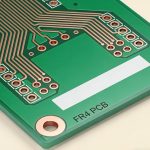
FR4 is often described as a stable and reliable PCB material.
It performs well in most operating environments and has become the standard substrate for rigid printed circuit boards. However, like many epoxy-based materials, FR4 is not completely immune to moisture.
Over time, the laminate can absorb water from the surrounding environment. The amount is usually small, but under certain conditions it may influence manufacturing quality, electrical performance, and long-term reliability.
For this reason, moisture resistance is one of the material properties engineers consider when selecting a PCB substrate.
What Moisture Absorption Means
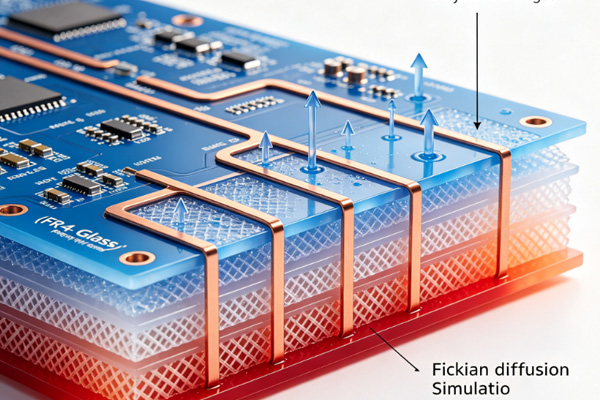
Moisture absorption refers to the ability of a material to take in water from the surrounding air.
For FR4, water molecules slowly penetrate the epoxy resin over time, especially when the material is stored in environments with high humidity.
The fiberglass reinforcement itself absorbs very little moisture. Most of the absorbed water is held within the resin system.
Although the absorption rate is relatively low compared with many plastics, it is not zero.
Why Moisture Matters in PCB Materials
A small amount of moisture may not noticeably affect a finished product.
However, excessive moisture exposure before manufacturing or during long-term service can create several potential issues.
These include:
- reduced insulation resistance
- dimensional changes
- soldering defects
- reduced long-term reliability
The level of impact depends on storage conditions, operating environment, and the PCB design itself.
Electrical Performance
Moisture slightly changes the electrical characteristics of epoxy resin.
Possible effects include:
- lower insulation resistance
- increased leakage current
- minor changes in dielectric properties
For most low-frequency electronic products, these changes are negligible.
In high-speed or high-frequency applications, stable electrical properties become more important, making proper material selection and storage even more critical.
Related reading:
Soldering Performance
Moisture becomes particularly important during PCB assembly.
When a moisture-containing PCB is exposed to reflow soldering temperatures, absorbed water rapidly turns into steam.
Excessive internal pressure may contribute to defects such as:
- blistering
- delamination
- resin cracking
These problems are more likely when boards have been stored improperly for long periods before assembly.
Dimensional Stability
FR4 is valued for maintaining stable dimensions during manufacturing.
Moisture absorption can cause slight expansion of the epoxy resin.
Although the dimensional change is generally small, it may become more significant in:
- multilayer PCBs
- fine-pitch designs
- products requiring tight mechanical tolerances
Proper environmental control helps minimize these effects.
Related reading:
Multilayer PCB Design Guide
Long-Term Reliability
Electronic products are often expected to operate for many years.
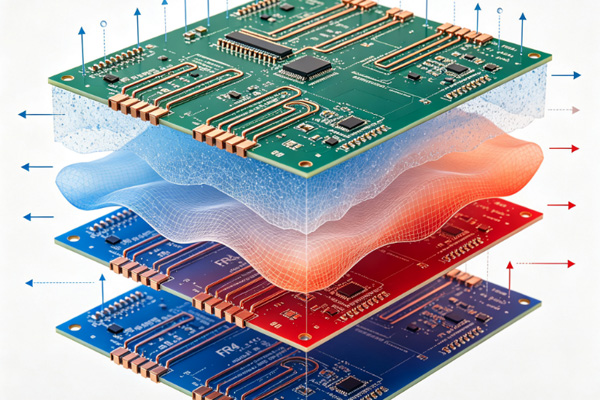
In humid environments, continuous moisture exposure may accelerate material aging.
Combined with repeated temperature changes, moisture can contribute to:
- reduced insulation performance
- mechanical stress
- lower long-term reliability
Applications such as industrial control systems, outdoor equipment, and automotive electronics typically require closer attention to environmental conditions.
Typical Moisture Absorption of FR4
Most standard FR4 laminates have a moisture absorption rate of approximately 0.10% to 0.20% under standardized laboratory test conditions.
The exact value varies depending on:
- resin formulation
- glass cloth style
- laminate manufacturer
- test method
Materials designed for high-reliability or high-frequency applications often achieve lower moisture absorption values.
Factors That Influence Moisture Absorption
Several conditions affect how much moisture FR4 absorbs.
Storage Environment
High humidity and long storage periods increase moisture uptake.
Dry, temperature-controlled storage helps preserve material quality.
Material Quality
Different laminate manufacturers use different resin systems.
Premium laminates often provide better moisture resistance than standard commercial grades.
Board Construction
Thicker boards and multilayer constructions may absorb and release moisture at different rates because of their internal structure.
Operating Conditions
Outdoor equipment or products used in humid climates remain exposed to moisture for much longer than electronics used in controlled indoor environments.
Reducing Moisture-Related Problems
Although moisture cannot be eliminated entirely, good manufacturing practices help reduce its impact.
Store Materials Correctly
Keep bare PCBs in a clean, dry environment with controlled humidity whenever possible.
Limit Storage Time
Boards stored for extended periods should be inspected before assembly.
Using older inventory first can help reduce unnecessary exposure to moisture.
Bake PCBs When Necessary
If a board has absorbed excessive moisture during storage, controlled baking before assembly may help remove retained moisture.
The baking process should always follow the PCB manufacturer’s recommendations to avoid damaging the laminate.
Select the Appropriate Material
For products operating in demanding environments, materials with improved thermal stability and lower moisture absorption may provide better long-term reliability.
Related reading: FR4 PCB vs High-Tg FR4
How to Evaluate Moisture Resistance
- Step 1
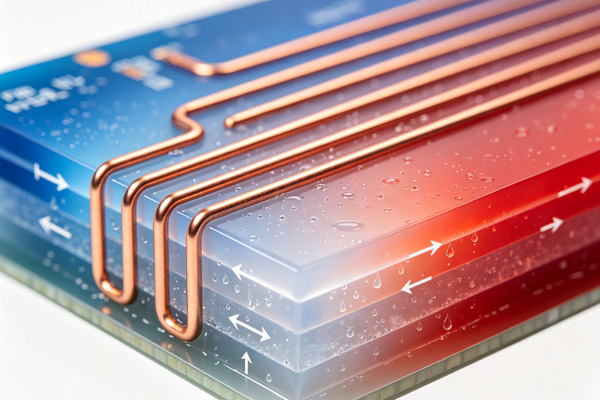
Review the expected operating environment, including humidity and temperature.
- Step 2
Check the laminate manufacturer’s moisture absorption specification.
- Step 3
Consider storage and transportation conditions before assembly.
- Step 4
Select a material that matches both manufacturing requirements and long-term operating conditions.
Common Misunderstandings
One common misconception is that FR4 is completely waterproof.
In reality, FR4 absorbs a small amount of moisture because of its epoxy resin system.
Another misunderstanding is that moisture only affects PCB assembly.
While assembly is one of the most sensitive stages, long-term exposure to humid environments can also influence electrical insulation and overall reliability.
Understanding these limitations helps engineers make more informed material selections.
Conclusion
FR4 offers good moisture resistance for most commercial and industrial applications, but it is not entirely unaffected by humidity.
Proper storage, appropriate handling, and selecting the right laminate for the operating environment all contribute to maintaining PCB quality and long-term reliability.
Considering moisture absorption as part of the material selection process helps reduce manufacturing risks and supports more dependable electronic products.
How to Minimize Moisture-Related PCB Issues
Step 1
Store bare PCBs in a dry, controlled environment.
Step 2
Reduce unnecessary storage time before assembly.
Step 3
Inspect stored boards and bake them when recommended by the manufacturer.
Step 4
Choose PCB materials that match the environmental conditions of the final product.
Frequently Asked Questions
A: Yes. FR4 absorbs a small amount of moisture through its epoxy resin, although the absorption rate is relatively low.
A: Moisture can affect electrical insulation, soldering performance, dimensional stability, and long-term reliability.
A: Yes. Excessive moisture may lead to blistering, delamination, or other defects during high-temperature soldering.
A: For most commercial applications, FR4 performs well. Products operating in continuously humid or harsh environments may require materials with enhanced moisture resistance.
A: Proper storage, controlled handling, following recommended baking procedures when necessary, and selecting the appropriate laminate all help minimize moisture-related problems.