Selecting the right PCB material is one of the earliest and most important decisions in electronic product development.
The substrate forms the foundation of the printed circuit board and influences everything from signal transmission and heat dissipation to mechanical strength and long-term reliability.
Although FR4 remains the most widely used material, modern electronic products often require specialized laminates designed for higher frequencies, higher temperatures, or more demanding operating environments.
Why PCB Material Selection Matters
A PCB substrate is much more than a mechanical support structure.
The material affects:
- Signal integrity
- Dielectric performance
- Thermal conductivity
- Moisture resistance
- Mechanical stability
- Manufacturing reliability
- Product lifespan
Choosing an unsuitable material may increase manufacturing costs, reduce reliability, or create performance limitations that cannot be corrected later through PCB layout changes.
For this reason, material selection should always be considered early in the design process.
FR4 PCB Material
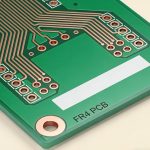
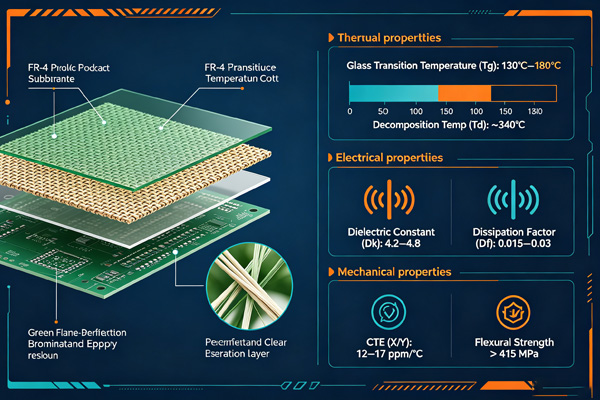
FR4 is the most commonly used PCB substrate worldwide.
It is manufactured from woven fiberglass and flame-retardant epoxy resin, providing a balanced combination of electrical performance, mechanical strength, and manufacturing cost.
FR4 is widely used in:
- Consumer electronics
- Industrial control systems
- Communication devices
- Medical equipment
- Power supplies
For many applications, FR4 remains the most practical choice because it delivers reliable performance without requiring specialized fabrication processes.
Related reading:
High-Tg PCB Material
High-Tg materials are based on FR4 technology but use resin systems with higher glass transition temperatures.
Compared with standard FR4, High-Tg laminates offer:
- Improved thermal stability
- Better dimensional control
- Higher resistance to thermal cycling
- Improved reliability during lead-free assembly
These materials are commonly used in:
- Automotive electronics
- Industrial equipment
- Telecommunications systems
- High-layer-count PCBs
Related reading:
- High-Tg PCB Material for High-Temperature and Reliable PCB Applications
- When Should You Choose High-Tg PCB Material
Rogers PCB Material
Rogers materials are widely used in high-frequency and RF applications.
Unlike standard FR4, Rogers laminates provide:
- Lower dielectric loss
- More stable dielectric properties
- Better performance at microwave frequencies
Common applications include:
- RF amplifiers
- Radar systems
- Satellite communications
- 5G infrastructure
- Aerospace electronics
Although Rogers materials are more expensive than FR4, they are often necessary when signal loss becomes a critical concern.
Related reading:
PTFE PCB Material
PTFE (Polytetrafluoroethylene) is another material commonly used in high-frequency electronic systems.
It offers:
- Extremely low dielectric loss
- Excellent high-frequency performance
- Stable electrical properties
PTFE substrates are frequently selected for:
- Microwave circuits
- Millimeter-wave systems
- RF antennas
- Advanced communication equipment
Because PTFE is mechanically softer than FR4, manufacturing requirements are often more demanding.
Polyimide PCB Material
Polyimide materials are known for their flexibility and thermal resistance.
They are commonly used in:
- Flexible PCBs
- Rigid-flex PCBs
- Aerospace systems
- Medical electronics
- Wearable devices
Compared with FR4, Polyimide offers improved flexibility and temperature resistance but generally involves higher manufacturing costs.
Ceramic PCB Material
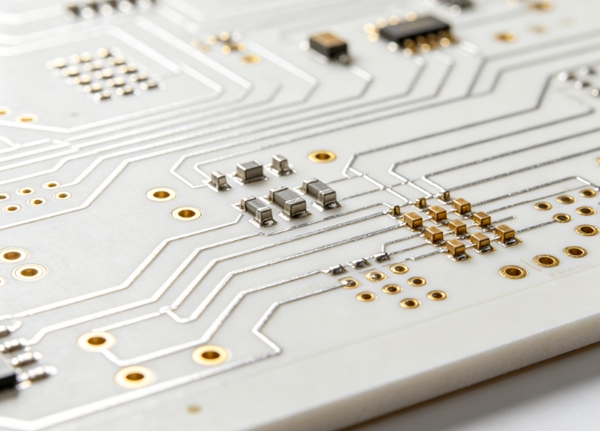
Ceramic substrates provide excellent thermal conductivity and electrical insulation.
Common ceramic materials include:
- Alumina
- Aluminum Nitride
- Beryllium Oxide
Ceramic PCBs are widely used in:
- Power electronics
- LED lighting
- Automotive power modules
- RF systems
Their superior heat dissipation makes them suitable for applications where standard FR4 cannot effectively manage thermal loads.
Related reading:
- Ceramic PCB vs FR4 PCB Thermal Electrical and Cost Comparison
- Ceramic PCB Applications in Power Electronics LED and RF Systems
Aluminum PCB Material
Aluminum PCBs belong to the metal-core PCB family.
They consist of:
- Copper circuit layer
- Thermal dielectric layer
- Aluminum base
These materials are commonly used when heat removal is a primary design concern.
Typical applications include:
- LED lighting
- Power supplies
- Motor control systems
- Automotive lighting
Compared with FR4, aluminum substrates provide significantly improved thermal conductivity.
CEM PCB Materials
CEM (Composite Epoxy Material) laminates are lower-cost alternatives to FR4.
Common variants include:
- CEM-1
- CEM-3
These materials are often used in:
- Household appliances
- Consumer products
- Low-cost electronic devices
While they reduce material costs, their electrical and thermal performance is generally lower than FR4.
Comparing Common PCB Materials
| Material | Thermal Performance | High Frequency Performance | Cost Level |
|---|---|---|---|
| FR4 | Moderate | Moderate | Low |
| High-Tg | Good | Moderate | Medium |
| Rogers | Moderate | Excellent | High |
| PTFE | Moderate | Excellent | High |
| Polyimide | Good | Good | High |
| Ceramic | Excellent | Excellent | High |
| Aluminum | Excellent | Moderate | Medium |
| CEM | Basic | Basic | Low |
No single material is ideal for every project.
The best choice depends on the specific electrical, thermal, and mechanical requirements of the product.
Factors to Consider When Selecting PCB Materials
Material selection should be based on application requirements rather than industry trends.
Important considerations include:
Operating Frequency
High-frequency circuits often require lower-loss materials such as Rogers or PTFE.
Thermal Requirements
Products generating significant heat may require ceramic or aluminum substrates.
Mechanical Requirements
Flexible and wearable devices commonly use Polyimide materials.
Reliability Expectations
Industrial and automotive applications often benefit from High-Tg laminates.
Manufacturing Budget
FR4 remains the most economical choice for most commercial products.
How to Choose the Right PCB Material
- Step 1
Define the electrical requirements, including operating frequency and signal integrity goals.
- Step 2
Evaluate thermal performance requirements and expected operating temperatures.
- Step 3
Consider mechanical factors such as flexibility, vibration, and environmental exposure.
- Step 4
Compare material performance with manufacturing cost before finalizing the substrate selection.
Conclusion
PCB materials play a critical role in determining electrical performance, thermal management, reliability, and manufacturing cost.
FR4 remains the dominant substrate for most electronic products, while High-Tg, Rogers, PTFE, Polyimide, Ceramic, and Aluminum materials address specialized requirements that standard laminates cannot always meet.
Selecting the right material requires balancing performance needs with manufacturing practicality and long-term reliability.
Understanding the strengths and limitations of each material helps engineers make more informed design decisions and build products that perform reliably throughout their service life.
Frequently Asked Questions
A: FR4 is the most widely used PCB substrate because it offers a good balance of performance, reliability, and cost.
A: Rogers and PTFE materials are commonly used for RF, microwave, and high-frequency applications because of their low dielectric loss.
A: Polyimide is the most common material used for flexible and rigid-flex PCB applications.
A: Ceramic and aluminum-based substrates generally provide much higher thermal conductivity than standard FR4.
A: The selection should be based on operating frequency, thermal requirements, mechanical needs, reliability expectations, and overall manufacturing budget.