When comparing PCB materials, one specification appears in almost every laminate datasheet—glass transition temperature, usually written as Tg.
For many low-power products, Tg may not receive much attention. However, once a board is exposed to higher soldering temperatures, continuous heat, or repeated thermal cycling, Tg becomes an important factor in long-term reliability.
Knowing what Tg represents—and what it does not—can help avoid choosing a material that performs well in the lab but struggles in real-world operating conditions.
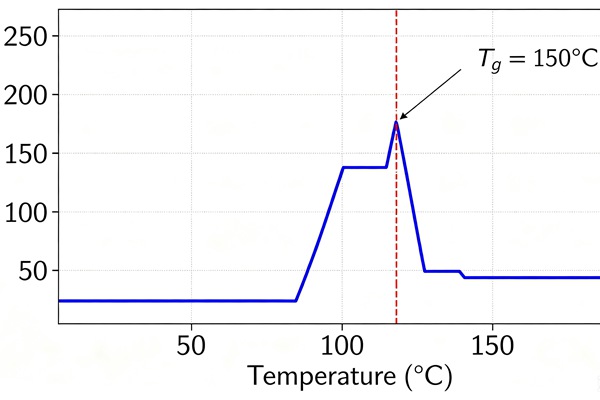
What Is Glass Transition Temperature?
Glass transition temperature is the point at which the resin inside a PCB laminate begins to change from a rigid, glass-like state to a softer and more flexible state.
This change does not mean the material melts. Instead, its mechanical properties begin to change as temperature rises.
Below the Tg value, the laminate remains relatively stable. Above it, expansion becomes more noticeable and the material is more sensitive to mechanical stress.
If you’re not familiar with laminate construction, PCB Laminate Explained for PCB Design and Manufacturing provides a good introduction to how PCB materials are built.
Why Tg Matters
A PCB is exposed to heat several times during its life.
Examples include:
- Component soldering
- Rework and repair
- Daily operating temperatures
- Repeated power cycling
When temperatures approach or exceed the Tg of the laminate, dimensional stability begins to decrease.
This can influence:
- Hole reliability
- Layer alignment
- Solder joint durability
- Long-term mechanical performance
For products expected to operate for years in demanding environments, Tg should be considered alongside other material properties rather than viewed in isolation.
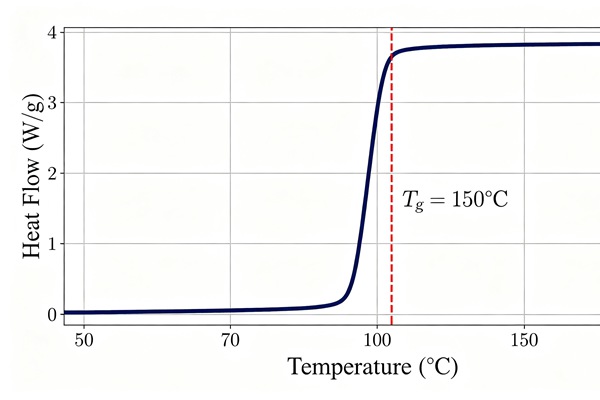
Typical Tg Ranges
PCB laminates are often grouped into three categories.
| Material | Typical Tg |
|---|---|
| Standard FR4 | 130–140°C |
| Mid-Tg FR4 | 150–170°C |
| High-Tg Materials | Above 170°C |
Actual values vary by laminate manufacturer and resin formulation.
The datasheet supplied by the laminate manufacturer should always be used when confirming material specifications.
Does a Higher Tg Always Mean a Better PCB?
Not necessarily.
A higher Tg improves thermal stability, but it does not automatically improve every aspect of PCB performance.
For many commercial products, standard FR4 remains a practical and economical choice.
Higher-Tg laminates become more valuable when the PCB experiences:
- Higher operating temperatures
- Multiple lead-free soldering cycles
- Large multilayer constructions
- Continuous thermal stress
Selecting a material with a higher Tg than the application requires may increase cost without providing a meaningful benefit.
Tg and High-Tg Materials
High-Tg laminates were developed for applications where conventional FR4 may reach its thermal limits.
They are commonly used in:
- Automotive electronics
- Industrial control systems
- Power electronics
- Communication equipment
- Multilayer PCBs with high component density
If you’re comparing standard and high-temperature laminates, FR4 PCB vs High-Tg FR4 explains the differences in more detail.
You can also refer to High-Tg PCB Material for High-Temperature and Reliable PCB Applications for a broader overview of where these materials are typically used.
Tg and PCB Manufacturing
Tg affects several manufacturing processes.
Lamination
Stable materials help maintain accurate layer registration during multilayer construction.
Drilling
Materials with suitable thermal stability are less likely to deform during fabrication.
Assembly
Modern lead-free soldering temperatures are significantly higher than traditional soldering processes.
Selecting a laminate with an appropriate Tg helps reduce thermal stress during assembly.
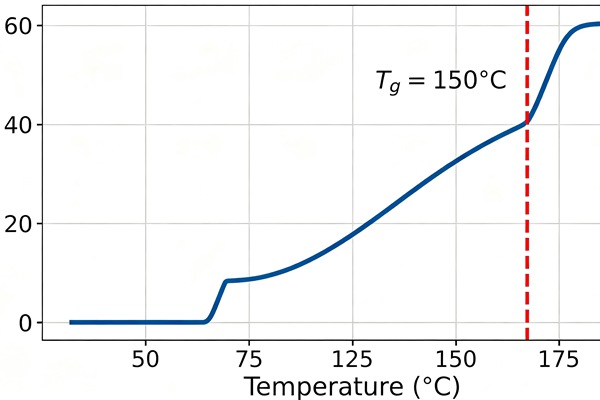
Tg Is Only One Material Property
Although Tg is important, it should not be the only factor considered during material selection.
Other material properties include:
- Dielectric constant (Dk)
- Dielectric loss (Df)
- Thermal conductivity
- Moisture absorption
- Mechanical strength
Evaluating these characteristics together provides a more complete picture of how a material will perform.
The overview in PCB Material Types Used in Modern Printed Circuit Boards is a useful starting point when comparing different laminate options.
Common Misunderstandings
One common misconception is that Tg indicates the maximum operating temperature of a PCB.
In reality, a laminate can operate above its Tg for short periods, but its mechanical behavior changes as the temperature increases.
Another misconception is that all FR4 materials have the same Tg.
FR4 is a material classification rather than a single product. Different manufacturers offer laminates with different Tg values, resin systems, and performance characteristics.
The article What Is FR4 PCB Material explains why FR4 covers a wide range of material formulations.
How to Select PCB Materials Based on Tg
- Step 1
Determine the highest operating and assembly temperatures the PCB will experience.
- Step 2
Review the laminate manufacturer’s Tg specification instead of relying on general values.
- Step 3
Compare Tg together with electrical, thermal, and mechanical properties.
- Step 4
Confirm the selected material with your PCB manufacturer before production begins.
Conclusion
Glass transition temperature is an important indicator of how a PCB laminate responds to heat.
While higher Tg materials provide better thermal stability, the most suitable choice depends on the actual operating environment, manufacturing process, and product requirements.
Selecting PCB materials based on a balanced evaluation of Tg and other key properties helps improve reliability without adding unnecessary manufacturing cost.
Frequently Asked Questions
A: Tg, or glass transition temperature, is the temperature at which the resin in a PCB laminate begins to change from a rigid state to a softer state.
A: No. Higher Tg materials offer improved thermal stability, but they are not necessary for every application. Material selection should match the product’s operating conditions.
A: Most standard FR4 laminates have a Tg between approximately 130°C and 140°C, although the exact value depends on the manufacturer.
A: Higher assembly temperatures, especially with lead-free soldering, place more thermal stress on the laminate. A suitable Tg helps the board maintain its mechanical stability during these processes.
A: Tg mainly relates to the mechanical and thermal behavior of the laminate. Electrical performance is more directly influenced by properties such as dielectric constant (Dk) and dielectric loss (Df).